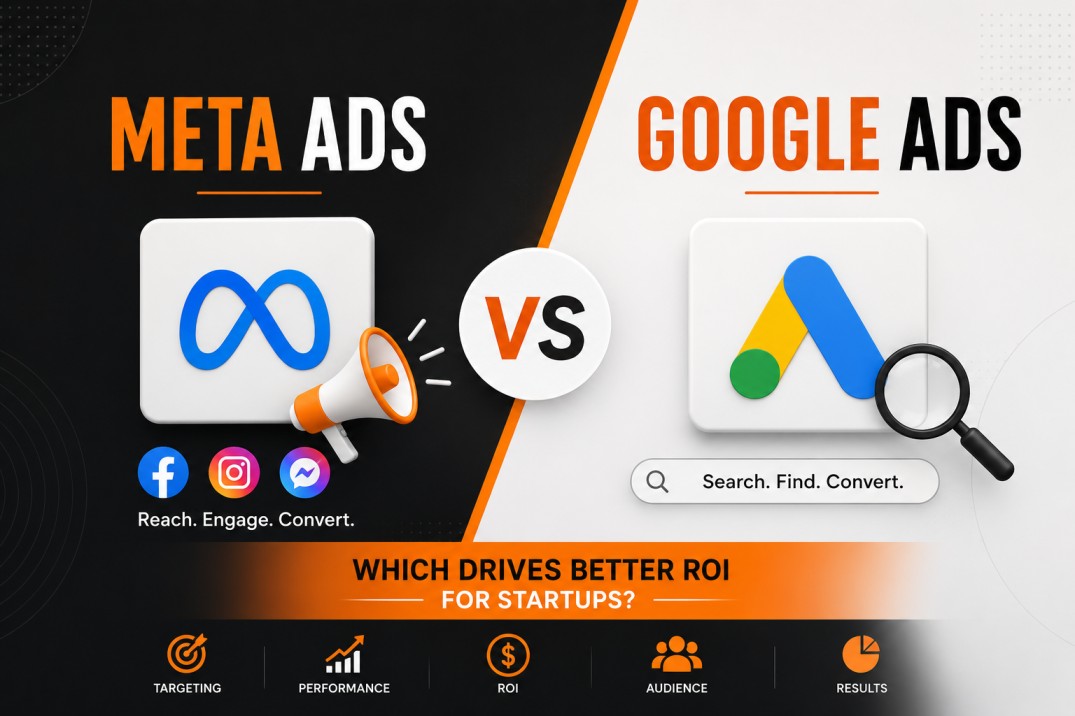
If you’re launching a startup, one of the first marketing decisions you’ll face is where to spend your advertising budget. Should you invest in Meta Ads and reach potential customers through Facebook and Instagram? Or should you focus on Google Ads and target people actively searching for your products and services? It’s a common question, and the answer can significantly impact your customer acquisition costs, lead quality, and overall return on investment (ROI). The truth is that both platforms can generate excellent results. However, they work very differently and are designed to achieve different marketing objectives. In this guide, we’ll compare Meta Ads and Google Ads, explain their strengths and weaknesses, and help startups determine which platform offers the best ROI in 2026. What Are Meta Ads? Meta Ads are advertisements that appear across Facebook, Instagram, Messenger, and Meta’s Audience Network. Unlike Google Ads, Meta Ads are based primarily on audience targeting rather than search intent. Instead of waiting for people to search for your business, Meta allows you to place your brand in front of highly targeted audiences based on factors such as: Meta Ads are often used for: Because Meta owns both Facebook and Instagram, businesses can reach billions of users through a single advertising platform. What Are Google Ads? Google Ads is Google’s advertising platform that allows businesses to display ads across: The most popular campaign type is Search Ads. These ads appear when users actively search for products, services, or information. For example: A user searching: “branding agency near me” or “Meta Ads management services” is already showing intent. Google Ads allows businesses to capture that intent and appear directly in front of potential customers at the exact moment they’re searching. Google Ads are commonly used for: Meta Ads vs Google Ads: Key Differences Although both platforms can generate leads and sales, they approach advertising differently. Intent vs Discovery This is the biggest difference. Google Ads Google captures existing demand. People already know they have a problem and are searching for a solution. For example: These users are actively looking to buy. Meta Ads Meta creates demand. Users are scrolling through social media when they discover your advertisement. They may not have been searching for your product, but compelling creatives can generate interest and conversions. Winner Google Ads for immediate purchase intent. Meta Ads for demand generation and audience building. Cost Per Click (CPC) Advertising costs vary by industry, competition, and location. However, Google Ads typically has higher CPCs because advertisers compete for valuable search traffic. Highly competitive industries often see expensive keywords. Examples include: Meta Ads generally offer lower CPCs because the platform focuses on audience targeting rather than keyword bidding. Winner Meta Ads usually provide lower traffic acquisition costs. Audience Targeting Meta Ads is one of the most powerful audience-targeting platforms available. Businesses can target users based on: Google Ads primarily targets based on search intent and keywords. While Google has audience targeting options, Meta remains stronger in this area. Winner Meta Ads Lead Quality This category depends heavily on the industry. Google users are often closer to making a purchase because they are actively searching for a solution. Meta users may require more nurturing before converting. For example: Someone searching: “branding agency in Pakistan” is likely further down the buying journey than someone casually browsing Instagram. Winner Google Ads for high-intent leads. Brand Awareness If nobody knows your brand exists, Google Ads can be limiting because it relies heavily on existing searches. Meta excels at introducing brands to new audiences. Startups often use Meta Ads to build visibility before customers begin searching for them. Winner Meta Ads Ecommerce Performance Both platforms perform exceptionally well for ecommerce businesses. However, they often serve different purposes. Meta Ads Excellent for: Google Ads Excellent for: The strongest ecommerce brands frequently use both platforms together. Winner Tie Speed of Results Google Ads can often generate leads quickly because you’re targeting people already searching. Meta Ads may require more testing and optimization before achieving consistent performance. However, once a Meta campaign is optimized, it can scale efficiently. Winner Google Ads Retargeting Capabilities Most users don’t convert on their first visit. Retargeting helps bring them back. Meta’s retargeting capabilities remain among the strongest in digital advertising. Businesses can show ads to: This helps improve conversion rates and maximize ROI. Winner Meta Ads Which Platform Is Better for Startups? The answer depends on your goals. Choose Meta Ads If: Meta Ads are particularly effective for: Choose Google Ads If: Google Ads often work well for: What Delivers Better ROI? This is the question most startups care about. The answer isn’t always Meta Ads. Also The answer isn’t always Google Ads. The answer is: The platform that aligns with your customer journey. If customers actively search for your service, Google Ads may generate better ROI. If customers need to discover your brand before considering a purchase, Meta Ads may outperform Google. Many successful businesses eventually use both platforms because they complement each other. Google captures demand. Meta creates demand. Together, they create a powerful marketing ecosystem. Common Mistakes Startups Make Choosing a Platform Based Only on Cost Lower CPCs don’t automatically mean higher ROI. Ignoring Customer Intent Understand how your customers buy before choosing a platform. Expecting Instant Results Advertising requires testing and optimization. Using Poor Creatives Even the best targeting cannot save weak advertisements. Not Tracking Conversions ROI cannot be measured without proper tracking. Meta Ads vs Google Ads: Final Verdict There is no universal winner. For startups focused on brand awareness, audience building, and demand generation, Meta Ads often provide exceptional value. For startups targeting customers actively searching for solutions, Google Ads can generate highly qualified leads and faster conversions. The most successful businesses rarely choose one platform forever. They use Google Ads to capture demand and Meta Ads to create demand. If you’re working with a limited budget, start with the platform that best matches how your customers discover and purchase your product or service. Ultimately, the best