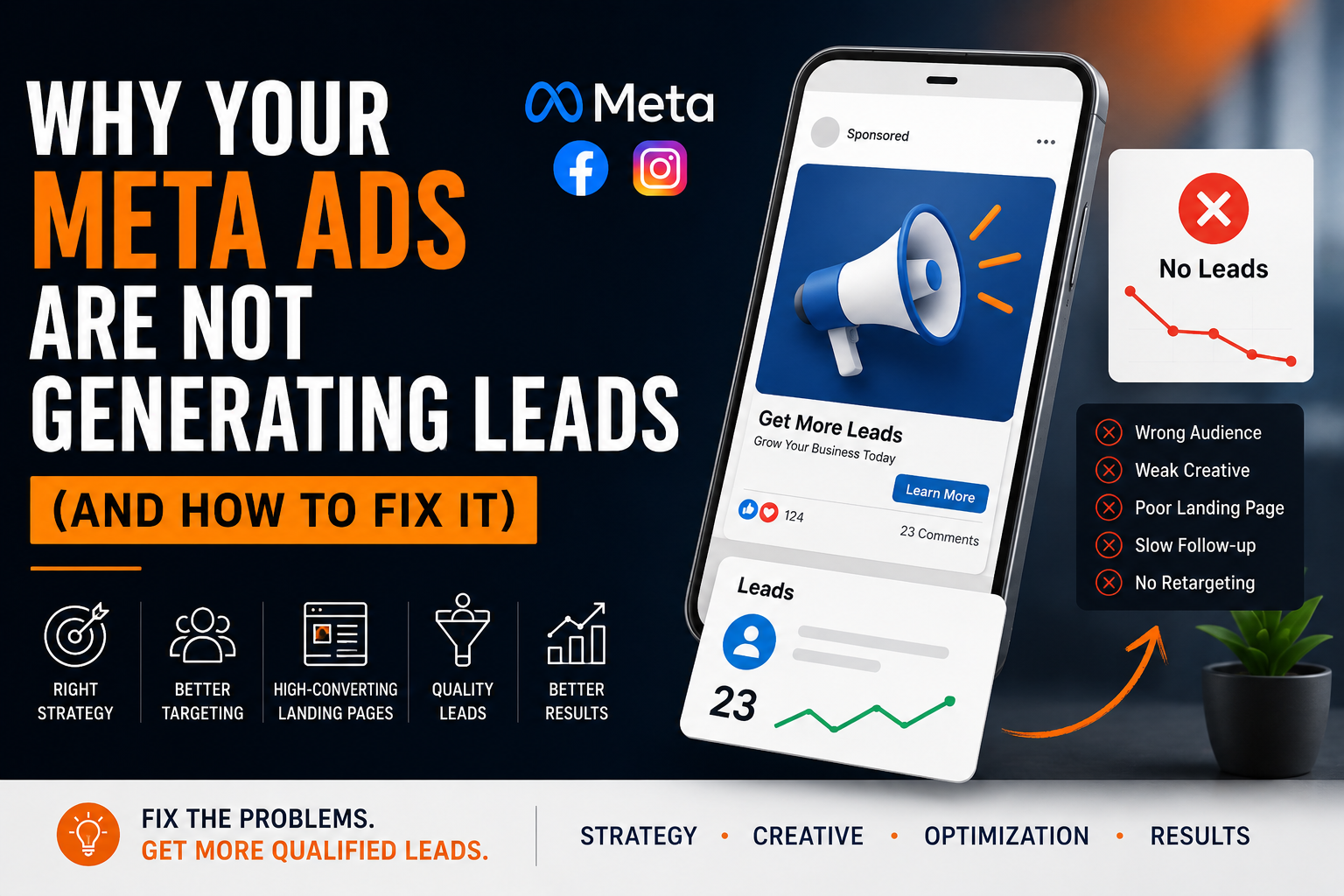
You’re spending money every day. Your Meta Ads are getting impressions. People are clicking your ads. Some are even visiting your website. But your phone isn’t ringing. Your inbox is quiet. And the leads you do receive rarely become paying customers. Sound familiar? You’re not alone. One of the biggest misconceptions about Meta Ads is that simply launching a campaign guarantees leads. In reality, successful Meta advertising isn’t about spending more money—it’s about having the right strategy. Every day, thousands of businesses invest in Facebook and Instagram advertising expecting immediate results. When those results don’t come, many assume Meta Ads no longer work. The truth is different. Most campaigns fail because of avoidable strategic mistakes—not because the platform itself is ineffective. Whether you’re running Meta Ads yourself or working with an agency, identifying these mistakes can dramatically improve your campaign performance and generate more qualified leads without necessarily increasing your advertising budget. Let’s look at the most common reasons why Meta Ads fail to generate leads—and more importantly, how to fix them. Diagnosis #1: You’re Optimizing for Clicks Instead of Customers One of the biggest mistakes businesses make happens before their ads even go live. They choose the wrong campaign objective. Many advertisers select objectives like: because they produce impressive numbers. Thousands of clicks. Hundreds of likes. High engagement. But none of these metrics pay your bills. If your goal is generating enquiries, appointments, purchases, or qualified leads, optimizing for traffic alone often sends your ads to people who are simply more likely to click—not necessarily those who are ready to become customers. Meta’s algorithm learns from the objective you choose. If you tell Meta to find people who click, it will find people who click. If you tell Meta to find people who submit leads or complete purchases, it begins optimizing toward those outcomes instead. That’s a significant difference. How to Fix It Always start by asking one question: What business result am I trying to achieve? If your objective is lead generation, choose campaign objectives that optimize for: Success should be measured by customers—not clicks. Diagnosis #2: Your Ads Are Reaching the Wrong Audience Even the most creative advertisement will struggle if it’s shown to the wrong people. Audience targeting remains one of the most important factors in Meta Ads success. Many businesses make one of two mistakes. Targeting Too Broadly Trying to reach everyone usually means connecting with no one. Broad audiences often result in: Targeting Too Narrowly On the other hand, stacking dozens of interests together can severely limit Meta’s ability to optimize. Overly restrictive targeting often increases costs while reducing campaign performance. The goal isn’t finding everyone. The goal is finding the people most likely to become customers. How to Fix It Build audiences based on your actual customers rather than assumptions. Use a combination of: As your campaigns collect data, Meta’s algorithm becomes increasingly effective at finding similar users. The better your audience, the better your results. Diagnosis #3: Your Creative Isn’t Giving People a Reason to Stop Scrolling Meta is a visual platform. Your advertisement has only a few seconds—sometimes less—to capture attention. If your creative blends into the news feed, the campaign has already failed before anyone reads your headline. Many businesses use advertisements that look like every other ad online. Common problems include: Remember, people don’t open Facebook or Instagram looking for advertisements. They open these platforms to consume content. Your creative has to interrupt that scrolling behavior. Ask yourself: Would I stop scrolling to look at this ad? If the answer is no, your audience probably won’t either. How to Fix It High-performing Meta creatives usually have three things in common. A strong hook Capture attention immediately. A clear value proposition Tell people why they should care. A compelling call-to-action Guide them toward the next step. Good design helps. Great messaging converts. The most successful Meta campaigns combine both. Diagnosis #4: Your Offer Isn’t Compelling Enough Sometimes the problem isn’t your audience. It isn’t your creative. It isn’t even your budget. It’s your offer. Many businesses advertise services without giving customers a reason to take action today. For example: “Contact us today.” “Learn more.” “Visit our website.” These are calls-to-action. They are not offers. People respond to value. Not advertisements. Think about what would genuinely motivate someone to stop scrolling and trust your business. Examples include: A strong offer reduces hesitation. It gives potential customers a reason to act now instead of later. How to Fix It Before launching any campaign, ask yourself: Why should someone contact us today instead of next month? Your answer should become the foundation of your advertising campaign. Businesses rarely click because they love advertisements. They click because they believe the offer will solve a problem. Diagnosis #5: Your Landing Page Is Losing Potential Customers Many businesses assume that once someone clicks their ad, the hard work is over. In reality, that’s where the conversion process begins. A high-performing Meta Ad can still fail if it sends users to a poor landing page. Imagine clicking on an advertisement that promises a free consultation. The page takes several seconds to load. The design looks outdated. There’s no clear call-to-action. You have to scroll endlessly just to find contact information. Most visitors won’t wait. They’ll simply leave. This creates a common misconception: “My Meta Ads aren’t working.” When the actual issue is the destination page. A high-converting landing page should: Every unnecessary step between the click and the enquiry reduces your conversion rate. How to Fix It Instead of sending traffic to a generic homepage, create dedicated landing pages for your campaigns. Keep the design simple. Use one clear objective. Reduce distractions. Guide visitors toward a single action, whether it’s submitting a form, booking a consultation, or starting a WhatsApp conversation. Diagnosis #6: You’re Responding Too Slowly Generating leads is only half the job. Converting them is the other half. One of the biggest reasons businesses fail to see results from Meta Ads is slow follow-up.