You’re spending money every day.
Your Meta Ads are getting impressions.
People are clicking your ads.
Some are even visiting your website.
But your phone isn’t ringing.
Your inbox is quiet.
And the leads you do receive rarely become paying customers.
Sound familiar?
You’re not alone.
One of the biggest misconceptions about Meta Ads is that simply launching a campaign guarantees leads. In reality, successful Meta advertising isn’t about spending more money—it’s about having the right strategy.
Every day, thousands of businesses invest in Facebook and Instagram advertising expecting immediate results. When those results don’t come, many assume Meta Ads no longer work.
The truth is different.
Most campaigns fail because of avoidable strategic mistakes—not because the platform itself is ineffective.
Whether you’re running Meta Ads yourself or working with an agency, identifying these mistakes can dramatically improve your campaign performance and generate more qualified leads without necessarily increasing your advertising budget.
Let’s look at the most common reasons why Meta Ads fail to generate leads—and more importantly, how to fix them.
Diagnosis #1: You’re Optimizing for Clicks Instead of Customers
One of the biggest mistakes businesses make happens before their ads even go live.
They choose the wrong campaign objective.
Many advertisers select objectives like:
- Traffic
- Engagement
- Video Views
- Reach
because they produce impressive numbers.
Thousands of clicks.
Hundreds of likes.
High engagement.
But none of these metrics pay your bills.
If your goal is generating enquiries, appointments, purchases, or qualified leads, optimizing for traffic alone often sends your ads to people who are simply more likely to click—not necessarily those who are ready to become customers.
Meta’s algorithm learns from the objective you choose.
If you tell Meta to find people who click, it will find people who click.
If you tell Meta to find people who submit leads or complete purchases, it begins optimizing toward those outcomes instead.
That’s a significant difference.
How to Fix It
Always start by asking one question:
What business result am I trying to achieve?
If your objective is lead generation, choose campaign objectives that optimize for:
- Leads
- Conversions
- Sales
- Messages (when appropriate)
Success should be measured by customers—not clicks.
Diagnosis #2: Your Ads Are Reaching the Wrong Audience
Even the most creative advertisement will struggle if it’s shown to the wrong people.
Audience targeting remains one of the most important factors in Meta Ads success.
Many businesses make one of two mistakes.
Targeting Too Broadly
Trying to reach everyone usually means connecting with no one.
Broad audiences often result in:
- Lower engagement
- Poor lead quality
- Wasted advertising budget
Targeting Too Narrowly
On the other hand, stacking dozens of interests together can severely limit Meta’s ability to optimize.
Overly restrictive targeting often increases costs while reducing campaign performance.
The goal isn’t finding everyone.
The goal is finding the people most likely to become customers.
How to Fix It
Build audiences based on your actual customers rather than assumptions.
Use a combination of:
- Custom Audiences
- Lookalike Audiences
- Website Visitors
- Customer Lists
- Previous Purchasers
- Instagram & Facebook Engagers
As your campaigns collect data, Meta’s algorithm becomes increasingly effective at finding similar users.
The better your audience, the better your results.
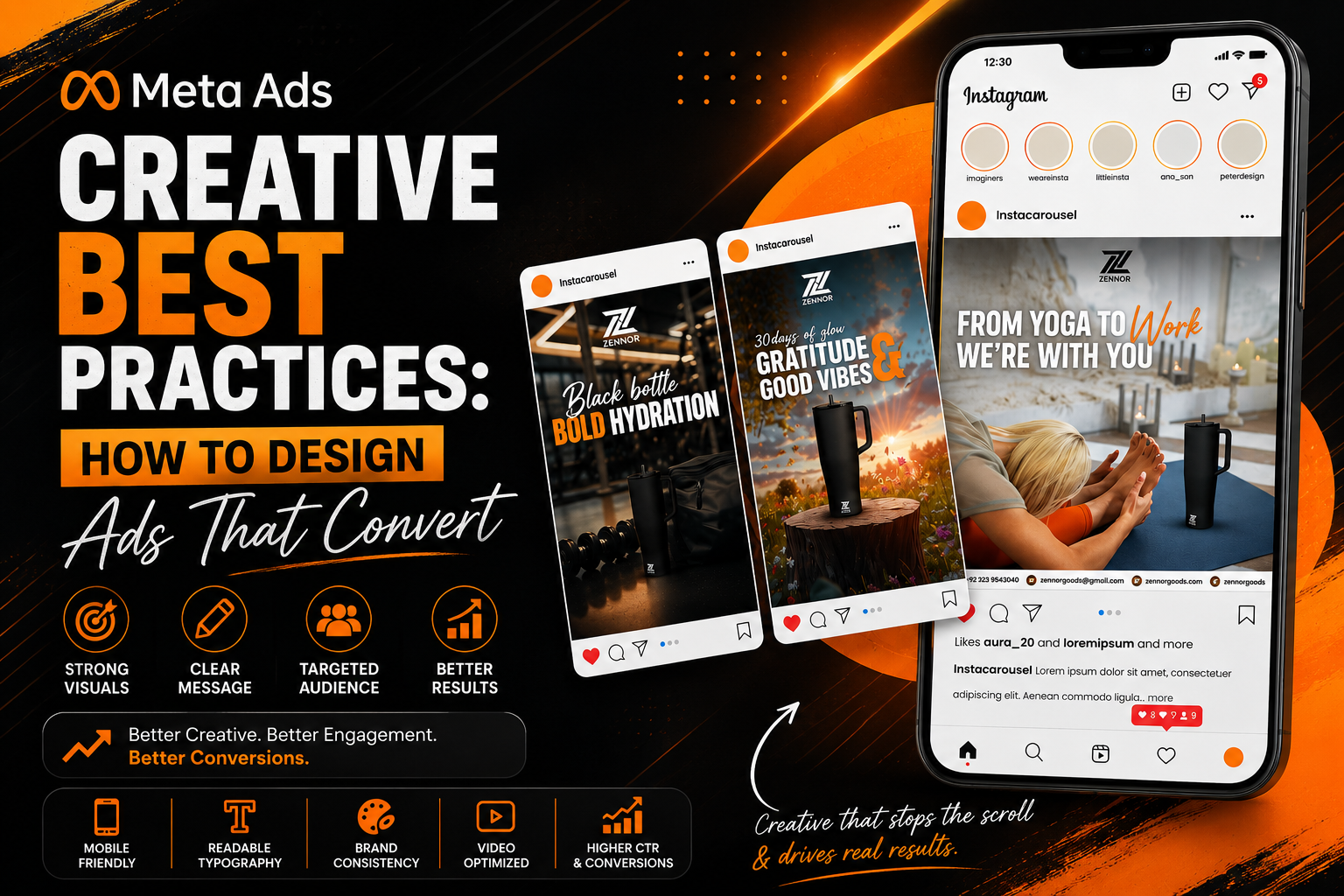
Diagnosis #3: Your Creative Isn’t Giving People a Reason to Stop Scrolling
Meta is a visual platform.
Your advertisement has only a few seconds—sometimes less—to capture attention.
If your creative blends into the news feed, the campaign has already failed before anyone reads your headline.
Many businesses use advertisements that look like every other ad online.
Common problems include:
- Generic stock photos
- Too much text
- Weak headlines
- Low-quality graphics
- No emotional hook
- Unclear messaging
Remember, people don’t open Facebook or Instagram looking for advertisements.
They open these platforms to consume content.
Your creative has to interrupt that scrolling behavior.
Ask yourself:
Would I stop scrolling to look at this ad?
If the answer is no, your audience probably won’t either.
How to Fix It
High-performing Meta creatives usually have three things in common.
A strong hook
Capture attention immediately.
A clear value proposition
Tell people why they should care.
A compelling call-to-action
Guide them toward the next step.
Good design helps.
Great messaging converts.
The most successful Meta campaigns combine both.
Diagnosis #4: Your Offer Isn’t Compelling Enough
Sometimes the problem isn’t your audience.
It isn’t your creative.
It isn’t even your budget.
It’s your offer.
Many businesses advertise services without giving customers a reason to take action today.
For example:
“Contact us today.”
“Learn more.”
“Visit our website.”
These are calls-to-action.
They are not offers.
People respond to value.
Not advertisements.
Think about what would genuinely motivate someone to stop scrolling and trust your business.
Examples include:
- Free consultation
- Free audit
- Free strategy session
- Limited-time discount
- Exclusive package
- Case study
- Free quotation
- Bonus service
- Downloadable guide
A strong offer reduces hesitation.
It gives potential customers a reason to act now instead of later.
How to Fix It
Before launching any campaign, ask yourself:
Why should someone contact us today instead of next month?
Your answer should become the foundation of your advertising campaign.
Businesses rarely click because they love advertisements.
They click because they believe the offer will solve a problem.
Diagnosis #5: Your Landing Page Is Losing Potential Customers
Many businesses assume that once someone clicks their ad, the hard work is over.
In reality, that’s where the conversion process begins.
A high-performing Meta Ad can still fail if it sends users to a poor landing page.
Imagine clicking on an advertisement that promises a free consultation.
The page takes several seconds to load.
The design looks outdated.
There’s no clear call-to-action.
You have to scroll endlessly just to find contact information.
Most visitors won’t wait.
They’ll simply leave.
This creates a common misconception:
“My Meta Ads aren’t working.”
When the actual issue is the destination page.
A high-converting landing page should:
- Load quickly on both desktop and mobile devices.
- Match the messaging used in the advertisement.
- Clearly explain the offer.
- Build trust through testimonials, case studies, or reviews.
- Make it easy to contact your business.
Every unnecessary step between the click and the enquiry reduces your conversion rate.
How to Fix It
Instead of sending traffic to a generic homepage, create dedicated landing pages for your campaigns.
Keep the design simple.
Use one clear objective.
Reduce distractions.
Guide visitors toward a single action, whether it’s submitting a form, booking a consultation, or starting a WhatsApp conversation.
Diagnosis #6: You’re Responding Too Slowly
Generating leads is only half the job.
Converting them is the other half.
One of the biggest reasons businesses fail to see results from Meta Ads is slow follow-up.
Think about the customer’s journey.
They click your ad.
Submit their information.
Wait.
An hour passes.
Then another.
By the time someone from your team reaches out, they’ve already contacted two or three competitors.
The opportunity is gone.
Speed matters.
The sooner you respond, the greater your chances of starting a meaningful conversation while your business is still fresh in the customer’s mind.
How to Fix It
Create a lead response process before launching your campaigns.
For example:
- Enable instant notifications.
- Assign leads to a dedicated team member.
- Use CRM software to organize enquiries.
- Automate acknowledgements where appropriate.
- Respond within minutes whenever possible.
For businesses using WhatsApp Ads, immediate engagement is one of the platform’s greatest advantages.
The faster you reply, the higher your chances of turning an enquiry into a customer.
Diagnosis #7: You’re Ignoring Retargeting
Most people don’t become customers the first time they see your advertisement.
They browse.
Compare options.
Read reviews.
Visit your website.
Then leave.
This is completely normal.
Yet many businesses spend their entire budget trying to reach new audiences while ignoring the people who have already shown interest.
Retargeting allows you to reconnect with those potential customers.
These audiences often include:
- Website visitors
- Instagram profile visitors
- Facebook page visitors
- Video viewers
- Previous leads
- Existing customers
Since these users are already familiar with your business, they’re often much more likely to convert than completely new audiences.
Retargeting is frequently one of the highest-performing campaign types within Meta Ads.
How to Fix It
Don’t think of retargeting as an optional feature.
Treat it as an essential part of your advertising strategy.
Show different messages to different audiences.
Someone discovering your business for the first time should see a different advertisement than someone who has already visited your pricing page.
The more relevant your message, the better your results.
Diagnosis #8: You’re Measuring the Wrong Metrics
One of the easiest ways to waste advertising budget is by celebrating numbers that don’t contribute to business growth.
It’s exciting to see:
- Thousands of impressions
- Hundreds of likes
- High reach
- Lots of clicks
But none of these metrics guarantee revenue.
A campaign with 1,000 clicks and zero customers has failed.
A campaign with 20 qualified leads that become paying clients has succeeded.
Successful advertisers focus on business metrics rather than vanity metrics.
Instead of asking:
“How many people liked my advertisement?”
Ask:
- How many qualified leads did we generate?
- How much did each qualified lead cost?
- How many leads became customers?
- What was the return on ad spend (ROAS)?
- Did the campaign generate profit?
These numbers provide a far more accurate picture of campaign performance.
How to Fix It
Create a reporting system that measures results throughout the entire sales journey.
Track:
- Cost per qualified lead
- Conversion rate
- Customer acquisition cost
- Revenue generated
- Return on investment
The goal isn’t to generate impressive advertising reports.
The goal is to grow the business.
Diagnosis #9: You’re Making Too Many Changes Too Quickly
Many advertisers become impatient after launching a campaign.
After one or two days they begin changing:
- Audiences
- Headlines
- Images
- Budgets
- Objectives
Every significant change forces Meta’s algorithm to begin learning again.
As a result, campaigns never collect enough data to optimize properly.
Successful Meta advertising requires patience.
Testing is important.
Constantly resetting campaigns is not.
How to Fix It
Allow campaigns sufficient time to gather meaningful data before making major decisions.
Instead of reacting to every daily fluctuation, review performance over a longer period.
Look for trends rather than isolated results.
Optimization should be based on evidence—not emotion.
Diagnosis #10: You’re Expecting Meta Ads to Fix Business Problems
This is perhaps the most important diagnosis in the entire article.
Meta Ads are incredibly powerful.
But they cannot solve fundamental business problems.
Advertising amplifies what’s already there.
If your business has:
- Weak branding
- An unclear value proposition
- Poor customer service
- An outdated website
- Uncompetitive pricing
- No sales process
Advertising will expose those weaknesses to more people.
Successful Meta Ads campaigns are built on strong business foundations.
Advertising performs best when supported by:
- Professional branding
- Clear messaging
- High-quality creative
- Strong offers
- Excellent customer experience
- Efficient follow-up
The businesses achieving the best results from Meta Ads rarely rely on advertising alone.
They combine effective marketing with a strong overall business strategy.
How to Fix It
Before increasing your advertising budget, evaluate your entire customer journey.
Ask yourself:
- Does my website inspire trust?
- Is my branding professional?
- Is my offer competitive?
- Can my team convert enquiries into customers?
Sometimes the biggest improvement doesn’t come from changing the campaign.
It comes from improving the business behind it.
A Quick Meta Ads Performance Checklist
Before increasing your advertising budget, make sure your campaigns include the following:
- The correct campaign objective
- A clearly defined target audience
- Scroll-stopping creatives
- A compelling offer
- A fast, mobile-friendly landing page
- Pixel and conversion tracking
- Retargeting campaigns
- Fast lead response times
- Meaningful performance metrics
- Regular optimization based on data
If one or more of these elements is missing, your campaigns may struggle to deliver consistent results—even with a healthy advertising budget.
Final Thoughts
When Meta Ads don’t generate leads, the platform is rarely the problem.
More often, the issue lies somewhere within the campaign strategy, creative execution, audience targeting, landing page, follow-up process, or the business itself.
Many advertisers immediately assume they need a larger budget when results slow down.
In reality, increasing your advertising spend without fixing the underlying issues usually means spending more money to produce the same disappointing outcome.
Successful Meta Ads campaigns are built on a simple principle:
Every stage of the customer journey matters.
The advertisement captures attention.
The offer creates interest.
The landing page builds trust.
The sales process converts interest into revenue.
When one part of that journey breaks down, your lead generation suffers.
The businesses achieving the strongest return on investment aren’t always spending the most money.
They’re constantly testing, measuring, learning, and improving.
Instead of asking:
“How can I spend more?”
Ask:
“How can I improve the customer experience from the first impression to the final conversion?”
That shift in thinking often makes the biggest difference.
Meta Ads remain one of the most powerful digital marketing platforms available today—but only when supported by the right strategy, compelling creative, continuous optimization, and a business that’s ready to convert interest into customers.
Need Better Results From Your Meta Ads?
If your Meta Ads are generating clicks but not qualified leads, it’s time to look beyond the advertising budget.
At Creative Solutions & Co., we help startups, service-based businesses, ecommerce brands, and growing companies create Meta Ads campaigns that focus on measurable business results—not vanity metrics.
Our Meta Ads services include:
- Campaign Strategy
- Audience Research & Targeting
- Creative Design & Copywriting
- Lead Generation Campaigns
- Ecommerce Campaigns
- WhatsApp Ads
- Lead Form Ads
- Conversion Tracking Setup
- Performance Optimization
- Monthly Reporting & Analysis
Every campaign we manage is built around one objective: generating high-quality leads and maximizing return on investment.
Whether you’re launching your first campaign or trying to improve existing results, our team can help you identify what’s preventing your Meta Ads from performing at their full potential.
Ready to turn your advertising budget into real business growth? Contact Creative Solutions & Co. today and let’s build a Meta Ads strategy that delivers measurable results.
Frequently Asked Questions (FAQs)
Why are my Meta Ads getting clicks but no leads?
If your Meta Ads are receiving clicks but not generating leads, the issue may be your landing page, offer, audience targeting, or campaign objective. High click-through rates don’t always translate into conversions if the customer journey isn’t optimized.
Why are my Facebook Ads not generating leads?
Facebook Ads may fail to generate leads due to poor audience targeting, weak ad creatives, slow-loading landing pages, unclear offers, or delayed follow-up. Identifying the weakest part of your campaign is essential to improving performance.
What is the best campaign objective for lead generation?
If your goal is generating enquiries or customer information, use Meta‘s Leads, Sales, or Messages objectives depending on your business model. Choosing the correct objective helps Meta optimize your campaign for users who are more likely to convert.
Why are my Meta Ads so expensive?
High advertising costs can result from competitive audiences, poor relevance scores, weak creatives, or inefficient targeting. Improving campaign quality often reduces costs while increasing lead quality.
How long does it take Meta Ads to start generating results?
Most Meta Ads campaigns require time for the learning phase before performance stabilizes. While some campaigns generate leads within days, others need one to two weeks of consistent data before meaningful optimization decisions can be made.
Should I use a landing page or send traffic to my homepage?
A dedicated landing page usually performs better because it’s designed around a single conversion goal. Homepages often contain multiple distractions that reduce conversion rates.
How much should I spend on Meta Ads?
There is no universal budget. Your ideal spend depends on your industry, competition, business goals, and customer acquisition costs. Start with a realistic testing budget, analyze performance, and increase investment once campaigns consistently generate profitable results.
Are WhatsApp Ads better than Lead Form Ads?
Both campaign types have advantages. WhatsApp Ads often generate higher-quality conversations for service businesses, while Lead Form Ads can produce larger volumes of enquiries. The best choice depends on your sales process and business objectives.
How often should Meta Ads campaigns be optimized?
Campaigns should be reviewed regularly, but significant changes shouldn’t be made every day. Analyze performance over meaningful periods, identify trends, and make data-driven optimizations rather than reacting to short-term fluctuations.
Should I hire a Meta Ads agency?
If you’re consistently spending money without achieving your desired results, working with an experienced Meta Ads agency can help improve campaign strategy, targeting, creative performance, and overall return on investment. An experienced team can also identify issues that may not be immediately obvious to in-house marketers.