You can have an outstanding product, exceptional customer service, and competitive pricing, yet still struggle to attract customers.
Why?
Because customers don’t experience your business first—they experience your brand.
Before someone visits your website, requests a quote, walks into your store, or contacts your team, they’ve already formed an opinion based on what they see. Your logo, website, social media presence, messaging, and overall visual identity combine to create an impression within seconds.
For many small businesses, branding is treated as an afterthought. It’s often reduced to designing a logo, choosing a few colors, and creating a Facebook page. Unfortunately, that’s where many businesses unknowingly begin losing customers.
Strong branding isn’t about making your business look attractive. It’s about creating trust, communicating professionalism, and giving customers a reason to choose you over dozens of competitors.
In this guide, we’ll explore the most common branding mistakes small businesses make and explain how you can avoid them to build a stronger, more memorable brand.
1. Treating a Logo as Your Entire Brand
This is, without question, the most common branding mistake.
Many business owners believe that once they have a professionally designed logo, their branding is complete.
It isn’t.
A logo is simply a visual identifier.
Your brand is the complete experience customers have with your business.
Think about some of the world’s most recognizable companies.
People don’t trust Apple because of its logo.
They trust Apple because every interaction—from product packaging and website design to advertising and customer experience—feels consistent.
The same applies to businesses of every size.
A complete brand includes:
- Brand identity
- Color palette
- Typography
- Brand voice
- Website design
- Social media branding
- Marketing materials
- Customer experience
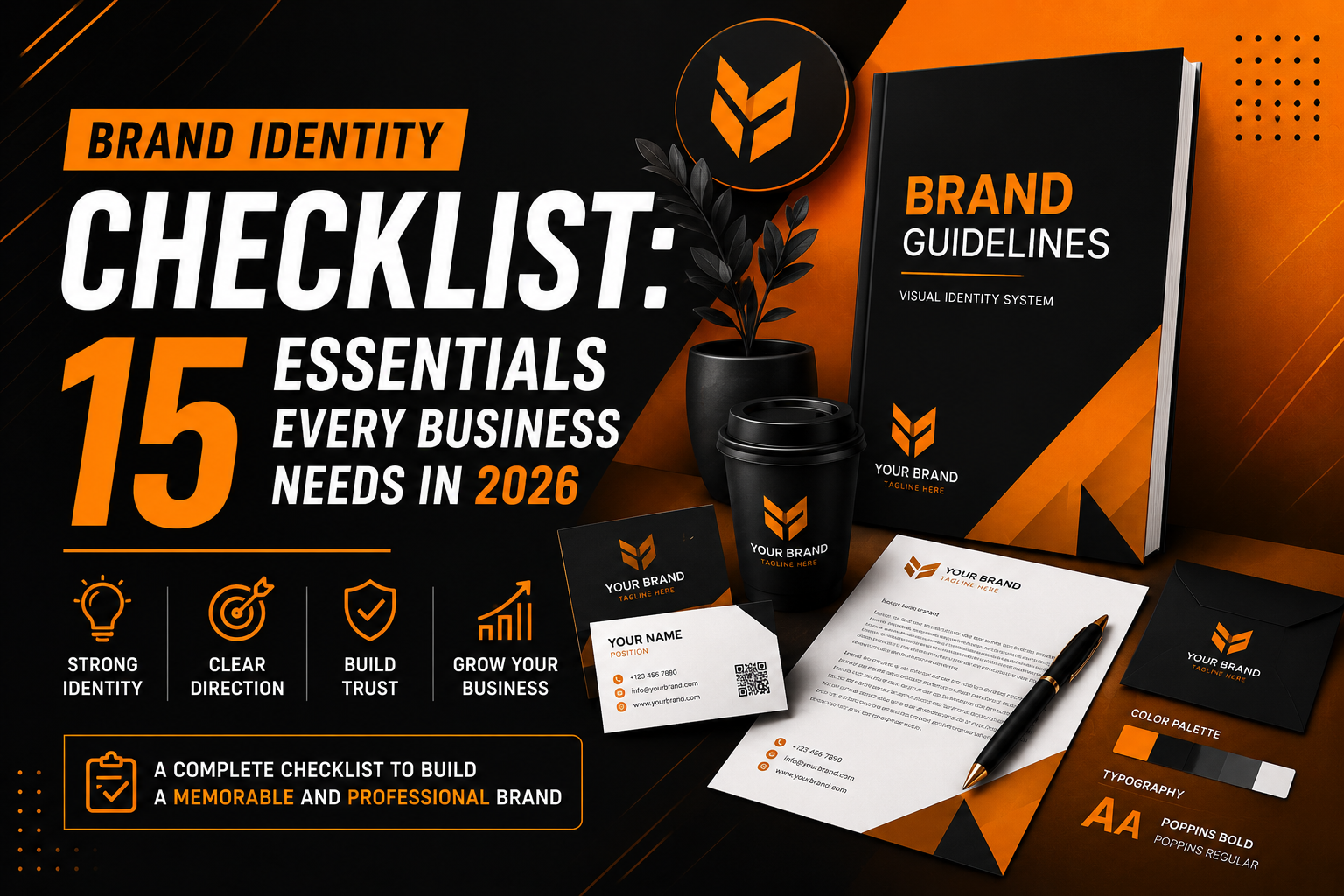
- Brand guidelines
Your logo introduces your business.
Your brand identity convinces customers to trust it.
How to Avoid It
Instead of investing only in logo design, think about how your business will appear across every customer touchpoint.
Ask yourself:
- Does my website reflect my brand?
- Are my social media designs consistent?
- Do my proposals and presentations look professional?
- Would someone instantly recognize my business anywhere they see it?
If the answer is no, you’re building a logo—not a brand.
2. Trying to Appeal to Everyone
One of the fastest ways to weaken a brand is trying to attract everyone.
Many small businesses use messaging like:
“We provide quality services for everyone.”
While it sounds inclusive, it tells customers absolutely nothing.
Successful brands know exactly who they’re speaking to.
A luxury interior design company communicates differently from a local restaurant.
A technology startup speaks differently from a healthcare provider.
Your branding should reflect:
- Your ideal customer
- Their challenges
- Their expectations
- Their purchasing behavior
- Their values
When your branding tries to please everyone, it rarely connects deeply with anyone.
Customers remember brands that feel relevant to them—not brands that try to be everything to everyone.
How to Avoid It
Clearly define your target audience before making branding decisions.
Ask questions such as:
- Who is my ideal customer?
- What problems do they need solved?
- Why should they choose my business instead of a competitor?
- What kind of personality should my brand communicate?
The clearer your audience, the stronger your branding becomes.
3. Copying Your Competitors Instead of Differentiating Yourself
It’s natural to research competitors before launching a business.
The mistake happens when inspiration turns into imitation.
Many small businesses end up using:
- Similar colors
- Similar typography
- Similar messaging
- Similar website layouts
- Similar logos
The result?
Customers struggle to distinguish one business from another.
Imagine walking down a street where every restaurant uses the same colors, fonts, and visual style.
Nothing stands out.
Your business should never rely on looking similar to competitors.
Instead, it should communicate what makes you different.
Strong brands answer one simple question:
“Why should someone choose us instead?”
Whether your advantage is premium quality, faster service, affordability, innovation, sustainability, or customer experience, your branding should communicate that clearly.
How to Avoid It
Study competitors to understand the market—not to copy it.
Look for opportunities to create a unique identity.
Your goal isn’t to fit in.
It’s to become memorable.
4. Inconsistent Branding Across Different Platforms
Imagine discovering a business through Instagram.
The profile looks modern and professional.
Then you visit the website.
Different colors.
Also, Different fonts.
Different messaging.
The logo appears differently on every page.
The experience immediately feels disconnected.
This inconsistency weakens customer confidence.
Consistency is one of the most powerful branding tools available.
Every interaction should reinforce the same identity.
This includes:
- Website
- Social media
- Business cards
- Company profiles
- Presentations
- Email signatures
- Advertisements
- Product packaging
When everything feels connected, customers perceive the business as more professional and trustworthy.
Inconsistent branding, on the other hand, often signals inexperience—even if the products or services are excellent.
How to Avoid It
Create clear brand guidelines that define:
- Logo usage
- Brand colors
- Typography
- Photography style
- Graphic elements
- Tone of voice
These guidelines ensure everyone representing your business communicates the brand consistently.
As your business grows, consistency becomes one of your greatest competitive advantages.
5. Ignoring Brand Strategy
Most small businesses jump straight into designing a logo without first answering a far more important question:
What does our brand actually stand for?
Brand strategy is the foundation of every successful brand. It defines how your business wants to be perceived and why customers should choose you over competitors.
Without a strategy, branding becomes a collection of random design decisions rather than a system that supports business growth.
A strong brand strategy answers questions like:
- Why does your business exist?
- What problems do you solve?
- Who is your ideal customer?
- What values define your business?
- What makes you different from competitors?
- How should customers feel after interacting with your brand?
These answers influence everything from your logo and website to your advertising campaigns and customer service.
When businesses skip this step, their branding often feels generic because there is no clear direction behind it.
How to Avoid It
Before designing anything, define your brand strategy.
Your visual identity should communicate your business goals—not replace them.
A beautiful logo without strategy is simply decoration.
A brand built on strategy becomes a competitive advantage.
6. Choosing Price Over Quality
Every business has a budget.
However, branding is one area where choosing the cheapest option often becomes the most expensive decision.
Many startups purchase inexpensive logos or template-based branding because they believe they’re saving money.
Months later they realize:
- The logo doesn’t scale properly.
- The branding doesn’t reflect the quality of their business.
- Marketing materials look inconsistent.
- Customers don’t remember the brand.
- They need to start over.
Now they’ve paid twice.
Professional branding isn’t expensive because designers spend more time making things look attractive.
It’s valuable because it solves business problems.
A professional branding process includes research, strategy, positioning, consistency, and long-term usability.
Cheap branding often skips all of those steps.
How to Avoid It
Think beyond today’s cost.
Ask yourself:
“Will this branding still represent my business five years from now?”
If the answer is uncertain, you’re probably making a short-term decision instead of a long-term investment.
7. Treating Branding as a One-Time Project
Many businesses believe branding ends once the logo is delivered.
In reality, that’s only the beginning.
Successful brands continuously evolve while remaining recognizable.
As your business grows, new products, services, audiences, and marketing channels emerge.
Your branding should support that growth.
This doesn’t mean changing your logo every year.
It means maintaining consistency while refining your brand to stay relevant.
Think about companies like Google, Airbnb, or Instagram.
Their branding has evolved over time, but customers can still recognize them instantly.
Small businesses should adopt the same mindset.
Branding isn’t a project.
It’s an ongoing business asset.
How to Avoid It
Review your branding regularly.
Ask yourself:
- Does our branding still reflect who we are?
- Has our target audience changed?
- Are we communicating the right message?
- Is our visual identity still competitive?
Small improvements over time are healthier than complete rebrands every few years.
8. Operating Without Brand Guidelines
Imagine hiring three different designers over three years.
Each one uses:
- Different fonts
- Different colors
- Different logo versions
- Different layouts
Eventually your marketing no longer looks like it belongs to the same business.
This happens more often than most business owners realize.
Brand guidelines solve this problem.
A professional brand guide acts as a rulebook that explains exactly how your brand should be presented.
It typically includes:
- Logo usage
- Color palette
- Typography
- Iconography
- Photography style
- Graphic elements
- Tone of voice
- Spacing rules
- Do’s and don’ts
Brand guidelines become even more valuable as businesses grow and multiple people begin creating marketing materials.
Without them, consistency becomes almost impossible.
How to Avoid It
Treat brand guidelines as an essential part of your branding—not an optional extra.
They save time, reduce mistakes, and protect your brand identity for years to come.
9. Building a Brand That Doesn’t Create an Emotional Connection
Customers rarely choose brands based on logic alone.
Emotions influence purchasing decisions far more than many businesses realize.
People don’t simply buy coffee.
They buy comfort.
They don’t buy watches.
Also, They buy status.
They don’t buy athletic shoes.
They buy confidence.
Your brand should communicate more than features.
It should communicate a feeling.
Ask yourself:
When customers interact with your business, how should they feel?
Do you want your brand to communicate:
- Trust?
- Innovation?
- Luxury?
- Reliability?
- Creativity?
- Simplicity?
- Excitement?
The strongest brands consistently evoke the same emotions across every customer interaction.
That’s why customers remember them long after they’ve forgotten competitors.
How to Avoid It
Focus on the experience your business creates rather than simply describing your products or services.
Great branding isn’t just seen.
It’s felt.
10. Believing Branding Doesn’t Affect Sales
This is perhaps the most costly misconception of all.
Many small business owners view branding as an unnecessary expense rather than a business investment.
They assume customers only care about:
- Price
- Features
- Quality
While these factors matter, branding influences how customers perceive all of them.
Two businesses can offer identical services at identical prices.
One appears trustworthy, professional, and established.
The other appears inconsistent and unmemorable.
Most customers will choose the business they trust—even if it charges slightly more.
Strong branding influences purchasing decisions by increasing:
- Customer confidence
- Brand recognition
- Perceived value
- Customer loyalty
- Referral rates
- Marketing effectiveness
It also improves the performance of nearly every marketing activity.
A professionally branded business often experiences:
- Better website engagement
- Higher advertising conversion rates
- More social media interaction
- Greater customer retention
- Increased word-of-mouth referrals
Branding isn’t simply about attracting attention.
It’s about making customers feel confident enough to choose your business.
That’s why branding should never be viewed as a design expense.
It’s a growth strategy.
Strong Brands Are Built Intentionally
The businesses that consistently outperform competitors aren’t always the ones with the biggest budgets.
They’re the ones with the clearest identity.
They understand who they are, who they serve, and how they want customers to perceive them.
Every logo, website, social media post, advertisement, and customer interaction reinforces the same message.
That’s what branding is designed to achieve.
Avoiding these common mistakes won’t just improve how your business looks.
It will improve how your business is remembered.
And in competitive markets, being remembered is often the first step toward being chosen.
Final Thoughts
Branding is often misunderstood as a design expense.
In reality, it’s one of the most valuable business investments you can make.
A strong brand doesn’t just help customers recognize your business—it helps them trust it, remember it, recommend it, and ultimately choose it over competitors.
The most successful small businesses aren’t always the ones with the biggest marketing budgets or the lowest prices. They’re the ones that communicate a clear identity, deliver a consistent customer experience, and build lasting relationships through trust.
If your business is struggling to stand out, attract quality customers, or justify premium pricing, the issue may not be your product or service.
It may be your branding.
By avoiding the mistakes discussed in this guide—such as treating your logo as your entire brand, copying competitors, ignoring brand strategy, or maintaining inconsistent visuals—you’ll be in a much stronger position to build a business that customers recognize and remember.
Branding isn’t about making your business look expensive.
It’s about making your business look credible.
Because in today’s competitive marketplace, credibility often determines who earns the customer’s attention—and who earns their business.
Ready to Build a Brand That Customers Remember?
Whether you’re launching a new startup, refreshing an existing business, or looking to create a stronger market presence, investing in professional branding can make a measurable difference.
At Creative Solutions & Co., we help businesses build more than just attractive logos. We create complete brand identities that communicate professionalism, build trust, and support long-term business growth.
Our branding services include:
- Logo Design
- Complete Brand Identity Design
- Brand Guidelines
- Company Profile Design
- Business Stationery
- Social Media Branding
- Website Design
- Marketing Collateral
Every branding project is developed with one goal in mind: helping your business stand out in a competitive market while creating a consistent experience across every customer touchpoint.
If you’re ready to build a brand that reflects the quality of your business, get in touch with Creative Solutions & Co. today and let’s create a brand your customers won’t forget.
Frequently Asked Questions (FAQs)
What are the most common branding mistakes small businesses make?
Some of the most common small business branding mistakes include treating a logo as the entire brand, trying to appeal to everyone, copying competitors, maintaining inconsistent branding across platforms, ignoring brand strategy, and viewing branding as a one-time project rather than an ongoing business investment.
Why do small businesses fail at branding?
Small businesses often fail at branding because they focus only on visual design instead of developing a complete brand strategy. Without consistent messaging, a clear target audience, and a professional brand identity, businesses struggle to build trust and differentiate themselves from competitors.
Is a logo enough to build a successful brand?
No. A logo is only one component of a brand. A successful brand also includes brand strategy, visual identity, typography, color palette, messaging, brand guidelines, website design, and a consistent customer experience across all channels.
How can branding help a small business grow?
Professional branding helps businesses build trust, improve brand recognition, attract ideal customers, increase perceived value, strengthen customer loyalty, and improve the performance of marketing campaigns. A strong brand can also support premium pricing and long-term business growth.
What is the difference between branding and marketing?
Branding defines who your business is and how customers perceive it, while marketing promotes your products or services to generate awareness and sales. Branding builds the foundation, and marketing communicates it to the right audience.
When should a business invest in professional branding?
Businesses should invest in professional branding as early as possible, ideally before launching. Creating a strong brand identity from the beginning helps establish credibility, ensures consistency, and reduces the need for costly rebranding later.
How do I know if my business needs a rebrand?
Signs that your business may need a rebrand include an outdated logo, inconsistent visual identity, changing target audience, declining customer engagement, business expansion, or branding that no longer reflects your company’s values or services.
Does branding really increase sales?
While branding alone doesn’t generate sales, it significantly influences purchasing decisions. A strong brand builds trust, improves recognition, enhances perceived value, and creates customer confidence—all of which contribute to higher conversion rates and stronger long-term revenue growth.
What should a professional branding package include?
A professional branding package typically includes logo design, brand identity development, color palette, typography, brand guidelines, business stationery, social media branding, company profile design, and other visual assets that ensure consistency across all customer touchpoints.
Why is brand consistency important?
Consistent branding helps customers recognize and trust your business regardless of where they interact with it. Maintaining the same visual identity, messaging, and tone across your website, social media, advertisements, and marketing materials strengthens brand recognition and builds long-term credibility.