News & Article

Tag: digital marketing

Meta Ads Creative Best Practices: How to Design Ads That Convert
Design
Meta Ads Creative Best Practices: How to Design Ads That Convert in 2026

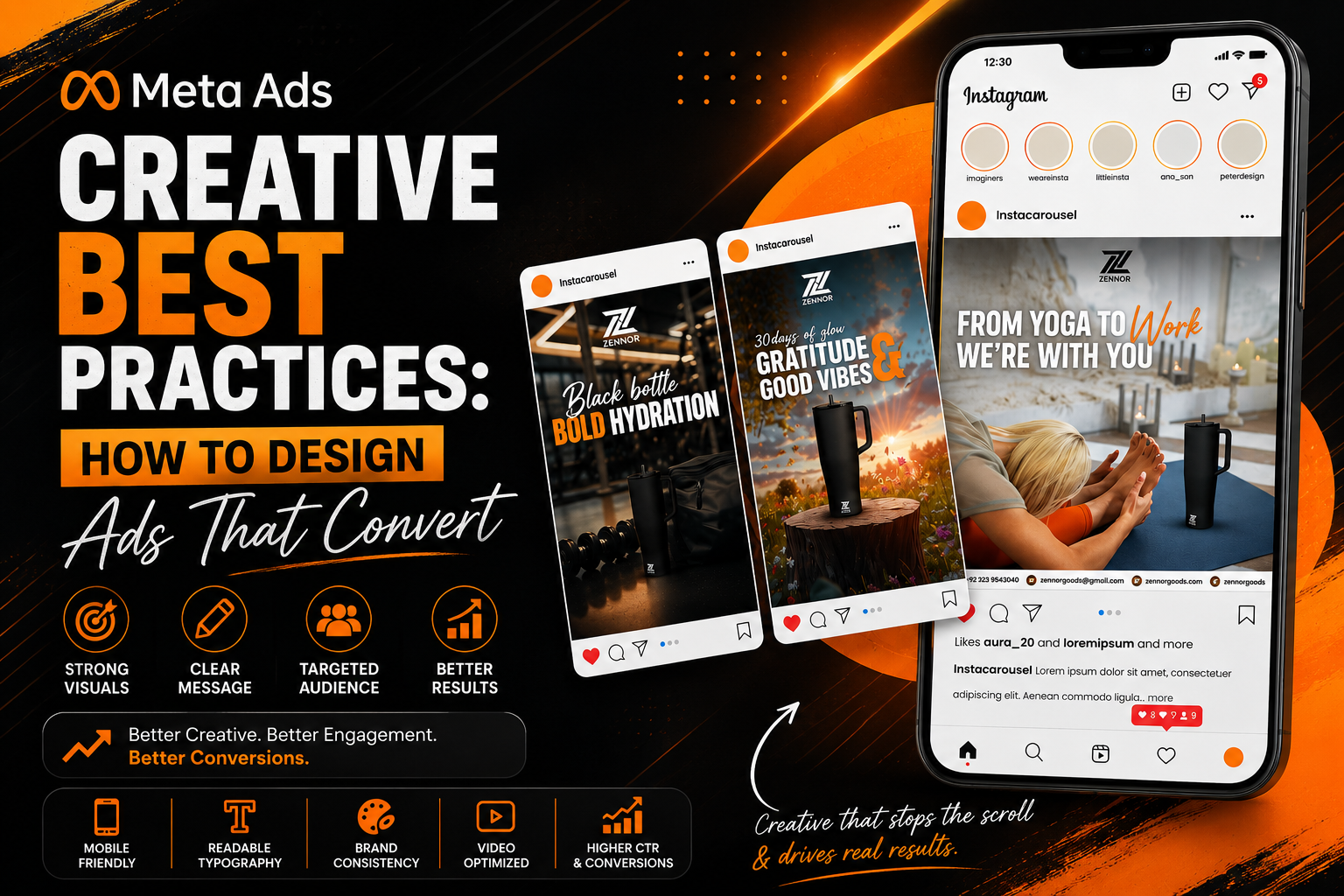
You can have the perfect audience, an optimized campaign, and a healthy advertising budget—but if your creative fails to capture attention, your Meta Ads will struggle to deliver results. Creative is one of the biggest factors influencing the success of Facebook and Instagram advertising. Every day, users scroll past hundreds of posts, videos, stories, and advertisements. Your creative has only a few seconds to stop that scroll and convince someone to engage with your business. Many advertisers focus heavily on audience targeting and campaign settings while overlooking the element customers actually see first: the advertisement itself. An effective Meta ad creative combines strong visual design, persuasive messaging, clear branding, and an understanding of customer psychology. Whether you’re promoting a product, generating leads, or building brand awareness, the quality of your creative can significantly impact click-through rates, cost per lead, and overall return on ad spend. In this guide, we’ll share practical Meta Ads creative best practices that help businesses design advertisements that attract attention, build trust, and generate better results. Why Creative Is the Most Important Part of a Meta Ad Meta’s advertising algorithm has become increasingly sophisticated. It can optimize audiences, placements, and bidding strategies—but it cannot transform a weak creative into a high-performing advertisement. Your creative is what users notice first. It determines whether they stop scrolling or continue to the next post. A well-designed creative can: Simply put, better creative often leads to better campaign performance. Understand Your Audience Before Designing Every successful advertisement begins with understanding the customer. Before opening Photoshop, Illustrator, or Canva, ask yourself: For example: A startup founder searching for branding services responds to very different messaging than someone looking to purchase a gaming accessory. Your design, colours, imagery, and copy should reflect the needs and expectations of your target audience. Designing without understanding your audience often results in attractive ads that fail to convert. 1. Capture Attention Within the First Three Seconds People scroll quickly. If your advertisement doesn’t immediately communicate value, it will likely be ignored. Strong opening visuals include: The goal is to make someone pause long enough to understand what you’re offering. 2. Keep One Clear Message One of the most common mistakes in Meta advertising is trying to communicate too many ideas in a single ad. Instead of listing every feature or service, focus on one primary message. For example: ✔️ “Get a Complete Brand Identity Starting from $150” is far more effective than combining logo design, social media management, website development, video editing, and Meta Ads into one graphic. A focused message is easier to understand and more likely to generate action. 3. Use High-Quality Visuals Low-resolution images, inconsistent branding, and cluttered graphics reduce trust. Your creative should always look professional. Use: Quality visuals reflect the quality of your business. 4. Brand Your Creative Early Many advertisers forget to include their branding until the very end of the customer journey. Instead, your advertisement should subtly reinforce your brand from the first impression. Include elements such as: Avoid overwhelming the design with branding, but ensure customers remember who the advertisement belongs to. Consistency improves long-term brand recognition. 5. Design for Mobile First The majority of Meta users browse Facebook and Instagram on mobile devices. If your advertisement isn’t designed for smaller screens, you’re immediately limiting its effectiveness. When designing creatives: A design that looks perfect on a desktop monitor may become difficult to read on a mobile device. 6. Use Minimal Text Your creative shouldn’t become a poster full of information. Instead, let the design communicate visually while the caption provides additional context. A good rule is: Simple creatives are generally easier to understand and perform better in fast-scrolling environments. 7. Choose Colors That Support the Message Color influences emotion and helps direct attention. For example: Rather than selecting random colours, use a palette that aligns with both your brand identity and the emotion you want customers to experience. Consistent colour usage also strengthens brand recognition across campaigns. 8. Create a Clear Visual Hierarchy A high-performing Meta ad should guide the viewer’s eyes naturally. People shouldn’t have to search for the most important information. A simple visual hierarchy usually follows this order: Using size, spacing, contrast, and alignment correctly makes your advertisement easier to understand within seconds. When everything competes for attention, nothing stands out. 9. Include a Strong Call-to-Action Never assume people know what to do next. Every Meta ad should include a clear call-to-action (CTA). Examples include: Your CTA should feel like a natural next step—not a pushy sales message. It should also align with your campaign objective. For example, a lead generation campaign might use “Book a Free Consultation,” while an ecommerce campaign may perform better with “Shop Now.” 10. Build Trust with Social Proof Customers are more likely to engage with businesses that already have credibility. Whenever possible, include trust signals such as: For example: These elements reduce uncertainty and increase confidence before users even click the ad. 11. Use Human Faces Whenever Relevant People are naturally drawn to faces. Eye contact, expressions, and body language help advertisements feel more authentic and relatable. Human-focused creatives often perform particularly well for: For ecommerce or product-focused campaigns, lifestyle images showing products in use often outperform isolated product photos. 12. Design Videos for Silent Viewing A significant percentage of users watch Facebook and Instagram videos without sound. Your creative should communicate the message even if audio is turned off. Include: If someone understands your advertisement without listening, you’ve created a stronger user experience. 13. Maintain Consistent Branding Across Every Campaign Customers rarely convert after seeing a single advertisement. They often encounter multiple touchpoints before making a decision. Your Meta Ads should maintain consistency with: Consistent branding increases familiarity, and familiarity builds trust. Businesses with recognizable visual identities are often remembered long after users have stopped scrolling. 14. Test Multiple Creative Variations One advertisement is rarely enough. Professional advertisers continuously test different creative elements to identify what resonates with their audience. Variables worth testing include: Rather than
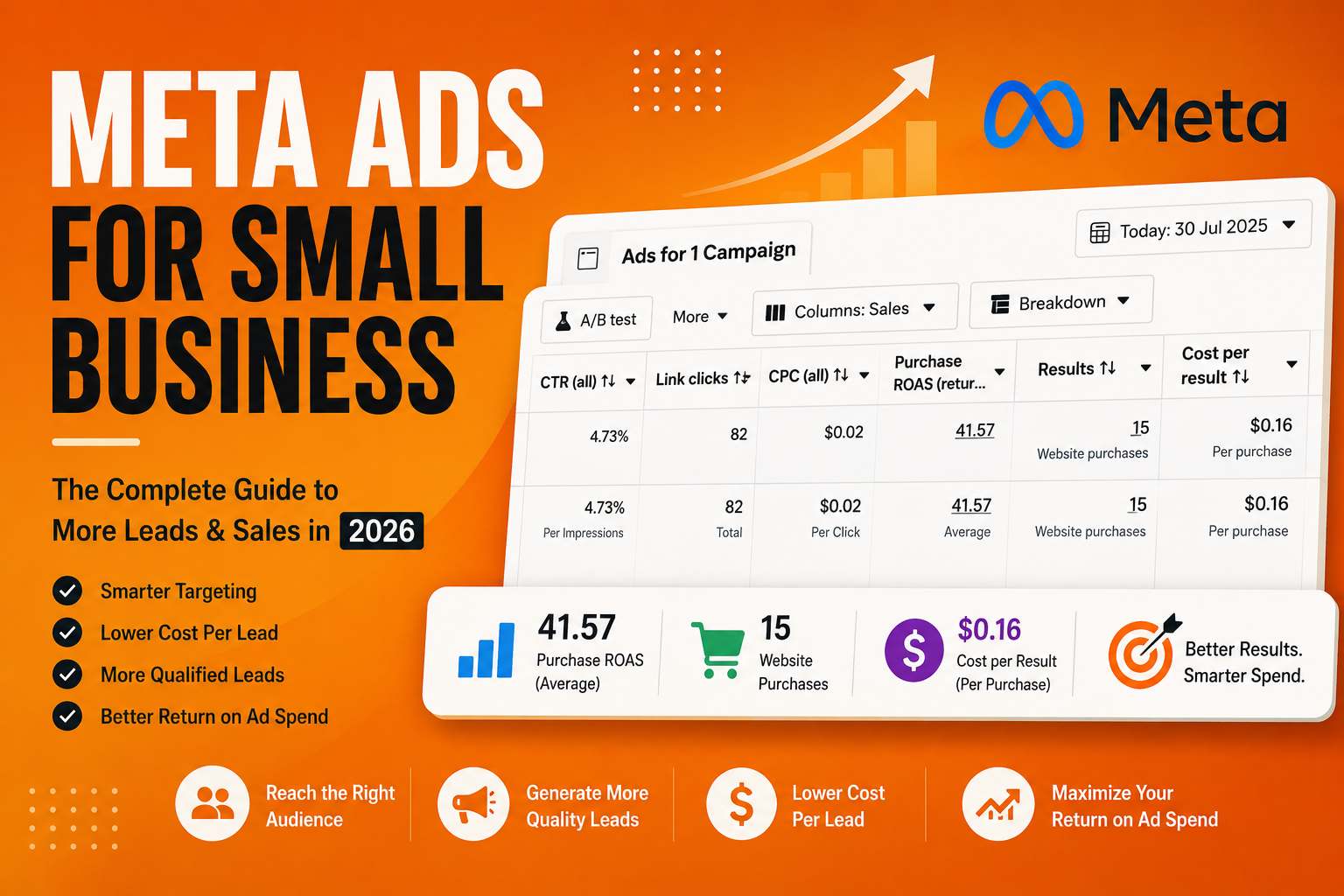
Meta Ads for Small Business featured image showing Meta Ads Manager dashboard, campaign performance metrics, and digital marketing elements illustrating lead generation and business growth.
Meta Ads
Meta Ads for Small Business: The Complete Guide to Getting More Leads and Sales in 2026

Every small business wants more customers. The challenge isn’t finding people who need your products or services—it’s reaching the right audience before your competitors do. Traditional advertising methods such as newspapers, billboards, flyers, and radio can still have value, but they often require larger budgets while offering limited targeting and difficult-to-measure results. Meta Ads have changed that. Today, even a small business with a modest advertising budget can reach thousands of potential customers through Facebook and Instagram. More importantly, those ads can be shown to people based on their location, interests, age, online behaviour, and buying intent. That’s why Meta Ads have become one of the most effective digital marketing channels for startups, local businesses, ecommerce stores, restaurants, real estate agencies, healthcare providers, and service-based companies. However, running Meta Ads successfully involves much more than simply clicking the “Boost Post” button. Many businesses spend money every month without generating quality leads because their campaigns are built without a clear strategy. In this guide, you’ll learn how Meta Ads work for small businesses, why they consistently outperform traditional advertising for many local companies, and how to build campaigns that generate qualified leads instead of wasting your marketing budget. What Are Meta Ads? Meta Ads are paid advertisements that appear across Meta’s advertising network, including: Using Meta Ads Manager, businesses can create highly targeted advertising campaigns designed to achieve specific marketing objectives such as: Unlike traditional advertising, Meta Ads allow businesses to control exactly who sees their advertisements. Instead of showing your ad to everyone, you can display it only to people who are most likely to become customers. This precision is one of the biggest reasons small businesses choose Meta Ads over many traditional advertising channels. Why Meta Ads Are Perfect for Small Businesses One of the biggest advantages of Meta Ads is accessibility. You don’t need a massive marketing budget to compete with larger businesses. A well-structured campaign with the right targeting and creative can often outperform businesses spending significantly more money. Here are some of the reasons Meta Ads continue to deliver excellent results for small businesses. Highly Targeted Advertising Instead of advertising to everyone, Meta allows you to target audiences based on: This means your advertising budget is focused on people who are genuinely interested in your products or services. Cost-Effective Marketing For many small businesses, every marketing dollar matters. Meta Ads provide complete control over your advertising budget. Whether you’re spending $10 per day or $500 per day, campaigns can be adjusted based on your business objectives and performance. Unlike many traditional advertising channels, you can pause, optimize, or scale campaigns whenever necessary. Measurable Results One of the biggest frustrations with traditional advertising is uncertainty. You rarely know exactly how many people responded to a newspaper advertisement or billboard. Meta Ads provide detailed performance metrics including: These insights allow businesses to make informed marketing decisions rather than relying on assumptions. Fast Lead Generation For service-based businesses, Meta Ads can begin generating enquiries within days rather than months. Businesses commonly use Meta Ads to receive: When campaigns are structured correctly, this creates a predictable flow of potential customers. Which Small Businesses Benefit Most from Meta Ads? Almost every business can benefit from Meta advertising. However, some industries consistently achieve excellent results because of the visual nature of Facebook and Instagram. Meta Ads are particularly effective for: Restaurants & Cafés Promote special offers, attract nearby customers, increase reservations, and showcase your menu through engaging visuals. Real Estate Agencies Generate qualified property enquiries through lead generation campaigns and targeted location-based advertising. Healthcare Clinics Reach local patients looking for healthcare services, consultations, and appointments while building trust within your community. Ecommerce Stores Increase online sales by promoting products directly to customers based on their shopping behaviour and interests. Educational Institutions Generate student enquiries for schools, colleges, academies, online courses, and training centres. Beauty Salons & Spas Promote services, attract appointment bookings, and build customer loyalty through targeted campaigns. Gyms & Fitness Centres Generate membership enquiries, advertise promotions, and encourage trial sign-ups using highly targeted local advertising. Professional Service Businesses Law firms, consultants, accountants, architects, agencies, and many other service providers can use Meta Ads to consistently generate qualified business enquiries. Why Many Small Businesses Fail with Meta Ads Despite Meta’s powerful advertising platform, many campaigns fail because businesses focus on advertising rather than strategy. Some of the most common mistakes include: Running Meta Ads successfully requires continuous testing, optimization, and data-driven decision-making. The businesses that consistently generate leads aren’t necessarily spending more—they’re making smarter advertising decisions. How to Build a Successful Meta Ads Strategy for a Small Business Many small businesses believe successful Meta advertising is simply about creating an attractive image and selecting a daily budget. In reality, every successful campaign is built on a complete marketing strategy. From audience research to campaign optimization, each stage influences the final result. Here’s what a professional Meta Ads strategy typically looks like. Step 1: Define a Clear Business Goal Before launching any campaign, determine exactly what success looks like. Different businesses have different objectives. For example: Choosing the correct campaign objective helps Meta’s algorithm deliver your ads to people most likely to complete your desired action. Launching campaigns without a clear objective often leads to wasted budget and poor-quality results. Step 2: Understand Your Target Audience One of Meta’s biggest strengths is its advanced audience targeting. Instead of advertising to everyone, successful campaigns focus on the people most likely to become customers. Important audience factors include: The more accurately your audience is defined, the more efficiently your advertising budget is spent. Step 3: Create High-Quality Ad Creatives Even the best targeting won’t save poor creative. Your advertisement has only a few seconds to capture attention before users continue scrolling. Effective Meta ad creatives usually include: Videos, carousel ads, lifestyle photography, testimonials, and user-generated content often outperform generic promotional graphics because they feel more authentic and engaging. Step 4: Write Ad Copy That Solves Problems People don’t click advertisements because businesses want

Why Your Meta Ads Are Not Generating Leads (And How to Fix It)
Meta Ads
Why Your Meta Ads Are Not Generating Leads (And How to Fix It)

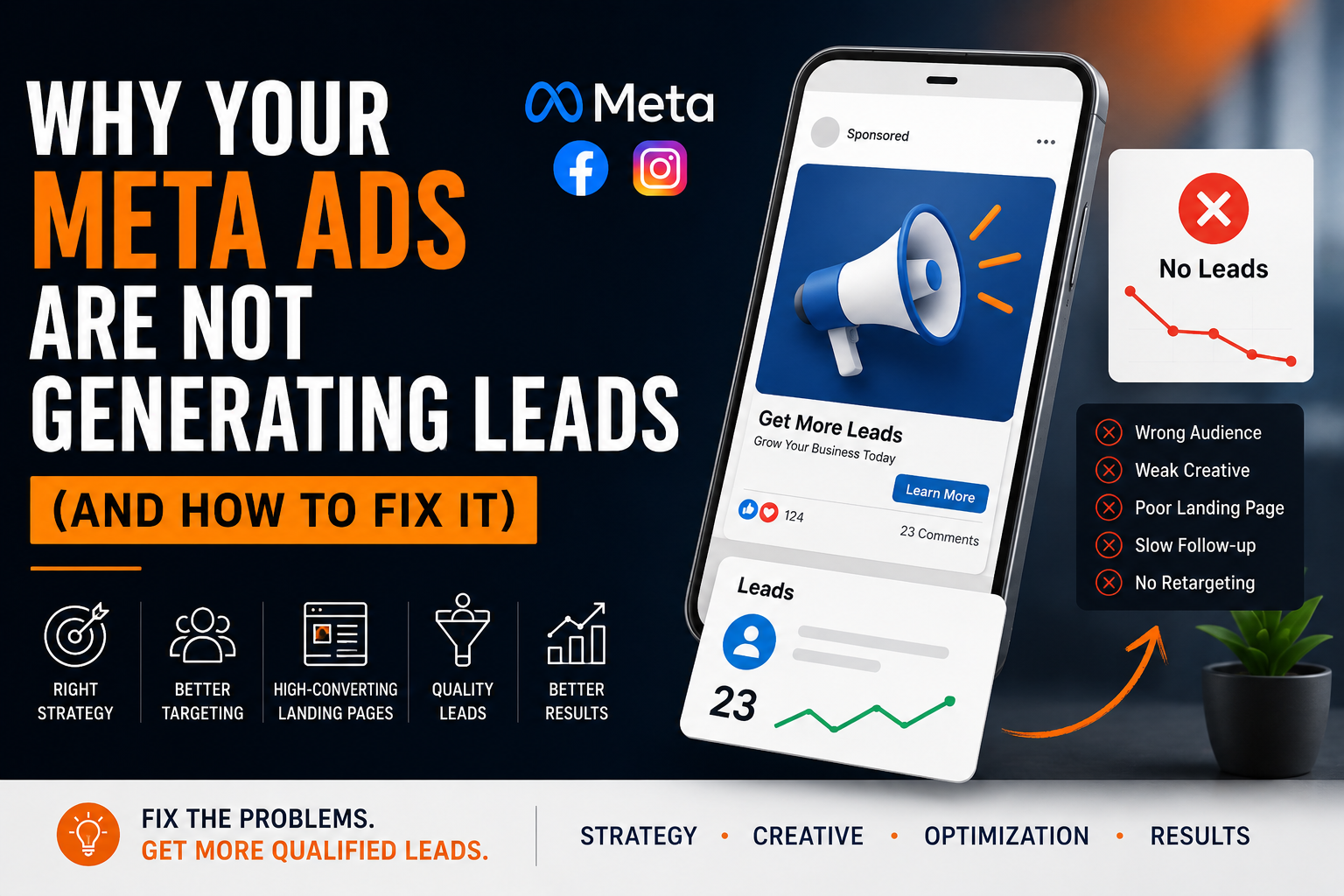
You’re spending money every day. Your Meta Ads are getting impressions. People are clicking your ads. Some are even visiting your website. But your phone isn’t ringing. Your inbox is quiet. And the leads you do receive rarely become paying customers. Sound familiar? You’re not alone. One of the biggest misconceptions about Meta Ads is that simply launching a campaign guarantees leads. In reality, successful Meta advertising isn’t about spending more money—it’s about having the right strategy. Every day, thousands of businesses invest in Facebook and Instagram advertising expecting immediate results. When those results don’t come, many assume Meta Ads no longer work. The truth is different. Most campaigns fail because of avoidable strategic mistakes—not because the platform itself is ineffective. Whether you’re running Meta Ads yourself or working with an agency, identifying these mistakes can dramatically improve your campaign performance and generate more qualified leads without necessarily increasing your advertising budget. Let’s look at the most common reasons why Meta Ads fail to generate leads—and more importantly, how to fix them. Diagnosis #1: You’re Optimizing for Clicks Instead of Customers One of the biggest mistakes businesses make happens before their ads even go live. They choose the wrong campaign objective. Many advertisers select objectives like: because they produce impressive numbers. Thousands of clicks. Hundreds of likes. High engagement. But none of these metrics pay your bills. If your goal is generating enquiries, appointments, purchases, or qualified leads, optimizing for traffic alone often sends your ads to people who are simply more likely to click—not necessarily those who are ready to become customers. Meta’s algorithm learns from the objective you choose. If you tell Meta to find people who click, it will find people who click. If you tell Meta to find people who submit leads or complete purchases, it begins optimizing toward those outcomes instead. That’s a significant difference. How to Fix It Always start by asking one question: What business result am I trying to achieve? If your objective is lead generation, choose campaign objectives that optimize for: Success should be measured by customers—not clicks. Diagnosis #2: Your Ads Are Reaching the Wrong Audience Even the most creative advertisement will struggle if it’s shown to the wrong people. Audience targeting remains one of the most important factors in Meta Ads success. Many businesses make one of two mistakes. Targeting Too Broadly Trying to reach everyone usually means connecting with no one. Broad audiences often result in: Targeting Too Narrowly On the other hand, stacking dozens of interests together can severely limit Meta’s ability to optimize. Overly restrictive targeting often increases costs while reducing campaign performance. The goal isn’t finding everyone. The goal is finding the people most likely to become customers. How to Fix It Build audiences based on your actual customers rather than assumptions. Use a combination of: As your campaigns collect data, Meta’s algorithm becomes increasingly effective at finding similar users. The better your audience, the better your results. Diagnosis #3: Your Creative Isn’t Giving People a Reason to Stop Scrolling Meta is a visual platform. Your advertisement has only a few seconds—sometimes less—to capture attention. If your creative blends into the news feed, the campaign has already failed before anyone reads your headline. Many businesses use advertisements that look like every other ad online. Common problems include: Remember, people don’t open Facebook or Instagram looking for advertisements. They open these platforms to consume content. Your creative has to interrupt that scrolling behavior. Ask yourself: Would I stop scrolling to look at this ad? If the answer is no, your audience probably won’t either. How to Fix It High-performing Meta creatives usually have three things in common. A strong hook Capture attention immediately. A clear value proposition Tell people why they should care. A compelling call-to-action Guide them toward the next step. Good design helps. Great messaging converts. The most successful Meta campaigns combine both. Diagnosis #4: Your Offer Isn’t Compelling Enough Sometimes the problem isn’t your audience. It isn’t your creative. It isn’t even your budget. It’s your offer. Many businesses advertise services without giving customers a reason to take action today. For example: “Contact us today.” “Learn more.” “Visit our website.” These are calls-to-action. They are not offers. People respond to value. Not advertisements. Think about what would genuinely motivate someone to stop scrolling and trust your business. Examples include: A strong offer reduces hesitation. It gives potential customers a reason to act now instead of later. How to Fix It Before launching any campaign, ask yourself: Why should someone contact us today instead of next month? Your answer should become the foundation of your advertising campaign. Businesses rarely click because they love advertisements. They click because they believe the offer will solve a problem. Diagnosis #5: Your Landing Page Is Losing Potential Customers Many businesses assume that once someone clicks their ad, the hard work is over. In reality, that’s where the conversion process begins. A high-performing Meta Ad can still fail if it sends users to a poor landing page. Imagine clicking on an advertisement that promises a free consultation. The page takes several seconds to load. The design looks outdated. There’s no clear call-to-action. You have to scroll endlessly just to find contact information. Most visitors won’t wait. They’ll simply leave. This creates a common misconception: “My Meta Ads aren’t working.” When the actual issue is the destination page. A high-converting landing page should: Every unnecessary step between the click and the enquiry reduces your conversion rate. How to Fix It Instead of sending traffic to a generic homepage, create dedicated landing pages for your campaigns. Keep the design simple. Use one clear objective. Reduce distractions. Guide visitors toward a single action, whether it’s submitting a form, booking a consultation, or starting a WhatsApp conversation. Diagnosis #6: You’re Responding Too Slowly Generating leads is only half the job. Converting them is the other half. One of the biggest reasons businesses fail to see results from Meta Ads is slow follow-up.

meta ads vs google ads
Meta Ads
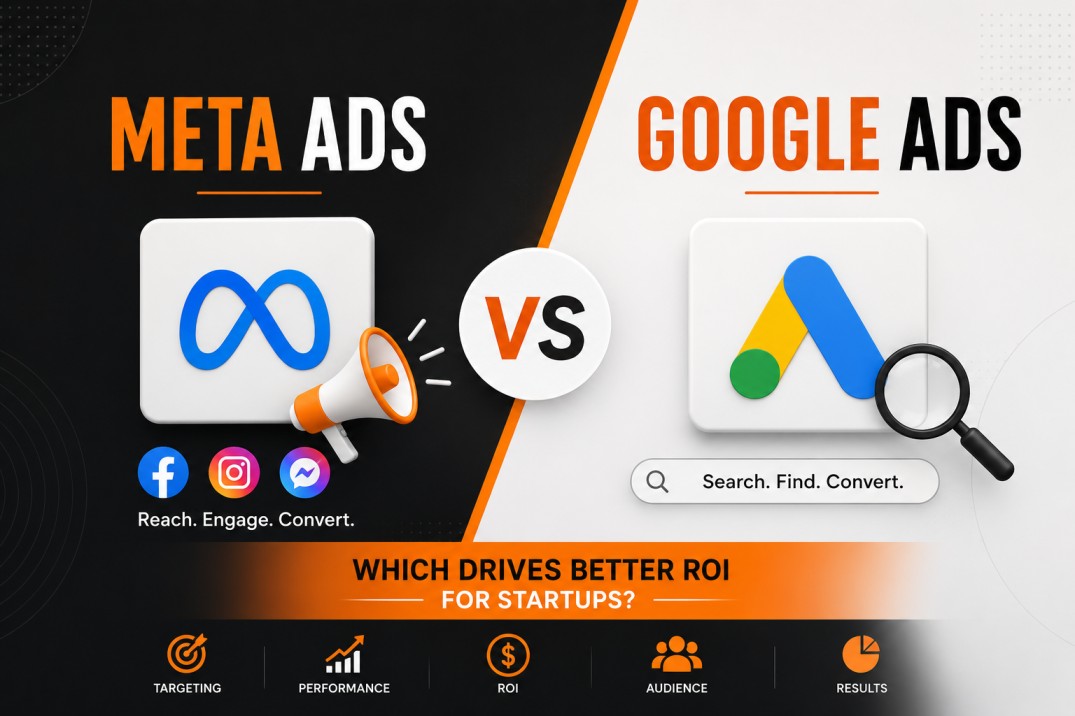
Meta Ads vs Google Ads: Which Drives Better ROI for Startups in 2026?

If you’re launching a startup, one of the first marketing decisions you’ll face is where to spend your advertising budget. Should you invest in Meta Ads and reach potential customers through Facebook and Instagram? Or should you focus on Google Ads and target people actively searching for your products and services? It’s a common question, and the answer can significantly impact your customer acquisition costs, lead quality, and overall return on investment (ROI). The truth is that both platforms can generate excellent results. However, they work very differently and are designed to achieve different marketing objectives. In this guide, we’ll compare Meta Ads and Google Ads, explain their strengths and weaknesses, and help startups determine which platform offers the best ROI in 2026. What Are Meta Ads? Meta Ads are advertisements that appear across Facebook, Instagram, Messenger, and Meta’s Audience Network. Unlike Google Ads, Meta Ads are based primarily on audience targeting rather than search intent. Instead of waiting for people to search for your business, Meta allows you to place your brand in front of highly targeted audiences based on factors such as: Meta Ads are often used for: Because Meta owns both Facebook and Instagram, businesses can reach billions of users through a single advertising platform. What Are Google Ads? Google Ads is Google’s advertising platform that allows businesses to display ads across: The most popular campaign type is Search Ads. These ads appear when users actively search for products, services, or information. For example: A user searching: “branding agency near me” or “Meta Ads management services” is already showing intent. Google Ads allows businesses to capture that intent and appear directly in front of potential customers at the exact moment they’re searching. Google Ads are commonly used for: Meta Ads vs Google Ads: Key Differences Although both platforms can generate leads and sales, they approach advertising differently. Intent vs Discovery This is the biggest difference. Google Ads Google captures existing demand. People already know they have a problem and are searching for a solution. For example: These users are actively looking to buy. Meta Ads Meta creates demand. Users are scrolling through social media when they discover your advertisement. They may not have been searching for your product, but compelling creatives can generate interest and conversions. Winner Google Ads for immediate purchase intent. Meta Ads for demand generation and audience building. Cost Per Click (CPC) Advertising costs vary by industry, competition, and location. However, Google Ads typically has higher CPCs because advertisers compete for valuable search traffic. Highly competitive industries often see expensive keywords. Examples include: Meta Ads generally offer lower CPCs because the platform focuses on audience targeting rather than keyword bidding. Winner Meta Ads usually provide lower traffic acquisition costs. Audience Targeting Meta Ads is one of the most powerful audience-targeting platforms available. Businesses can target users based on: Google Ads primarily targets based on search intent and keywords. While Google has audience targeting options, Meta remains stronger in this area. Winner Meta Ads Lead Quality This category depends heavily on the industry. Google users are often closer to making a purchase because they are actively searching for a solution. Meta users may require more nurturing before converting. For example: Someone searching: “branding agency in Pakistan” is likely further down the buying journey than someone casually browsing Instagram. Winner Google Ads for high-intent leads. Brand Awareness If nobody knows your brand exists, Google Ads can be limiting because it relies heavily on existing searches. Meta excels at introducing brands to new audiences. Startups often use Meta Ads to build visibility before customers begin searching for them. Winner Meta Ads Ecommerce Performance Both platforms perform exceptionally well for ecommerce businesses. However, they often serve different purposes. Meta Ads Excellent for: Google Ads Excellent for: The strongest ecommerce brands frequently use both platforms together. Winner Tie Speed of Results Google Ads can often generate leads quickly because you’re targeting people already searching. Meta Ads may require more testing and optimization before achieving consistent performance. However, once a Meta campaign is optimized, it can scale efficiently. Winner Google Ads Retargeting Capabilities Most users don’t convert on their first visit. Retargeting helps bring them back. Meta’s retargeting capabilities remain among the strongest in digital advertising. Businesses can show ads to: This helps improve conversion rates and maximize ROI. Winner Meta Ads Which Platform Is Better for Startups? The answer depends on your goals. Choose Meta Ads If: Meta Ads are particularly effective for: Choose Google Ads If: Google Ads often work well for: What Delivers Better ROI? This is the question most startups care about. The answer isn’t always Meta Ads. Also The answer isn’t always Google Ads. The answer is: The platform that aligns with your customer journey. If customers actively search for your service, Google Ads may generate better ROI. If customers need to discover your brand before considering a purchase, Meta Ads may outperform Google. Many successful businesses eventually use both platforms because they complement each other. Google captures demand. Meta creates demand. Together, they create a powerful marketing ecosystem. Common Mistakes Startups Make Choosing a Platform Based Only on Cost Lower CPCs don’t automatically mean higher ROI. Ignoring Customer Intent Understand how your customers buy before choosing a platform. Expecting Instant Results Advertising requires testing and optimization. Using Poor Creatives Even the best targeting cannot save weak advertisements. Not Tracking Conversions ROI cannot be measured without proper tracking. Meta Ads vs Google Ads: Final Verdict There is no universal winner. For startups focused on brand awareness, audience building, and demand generation, Meta Ads often provide exceptional value. For startups targeting customers actively searching for solutions, Google Ads can generate highly qualified leads and faster conversions. The most successful businesses rarely choose one platform forever. They use Google Ads to capture demand and Meta Ads to create demand. If you’re working with a limited budget, start with the platform that best matches how your customers discover and purchase your product or service. Ultimately, the best

WhatsApp Ads vs Lead Form Ads comparison showing lead quality, cost per lead, conversion rates, and Meta Ads strategy for businesses in 2026
Marketing
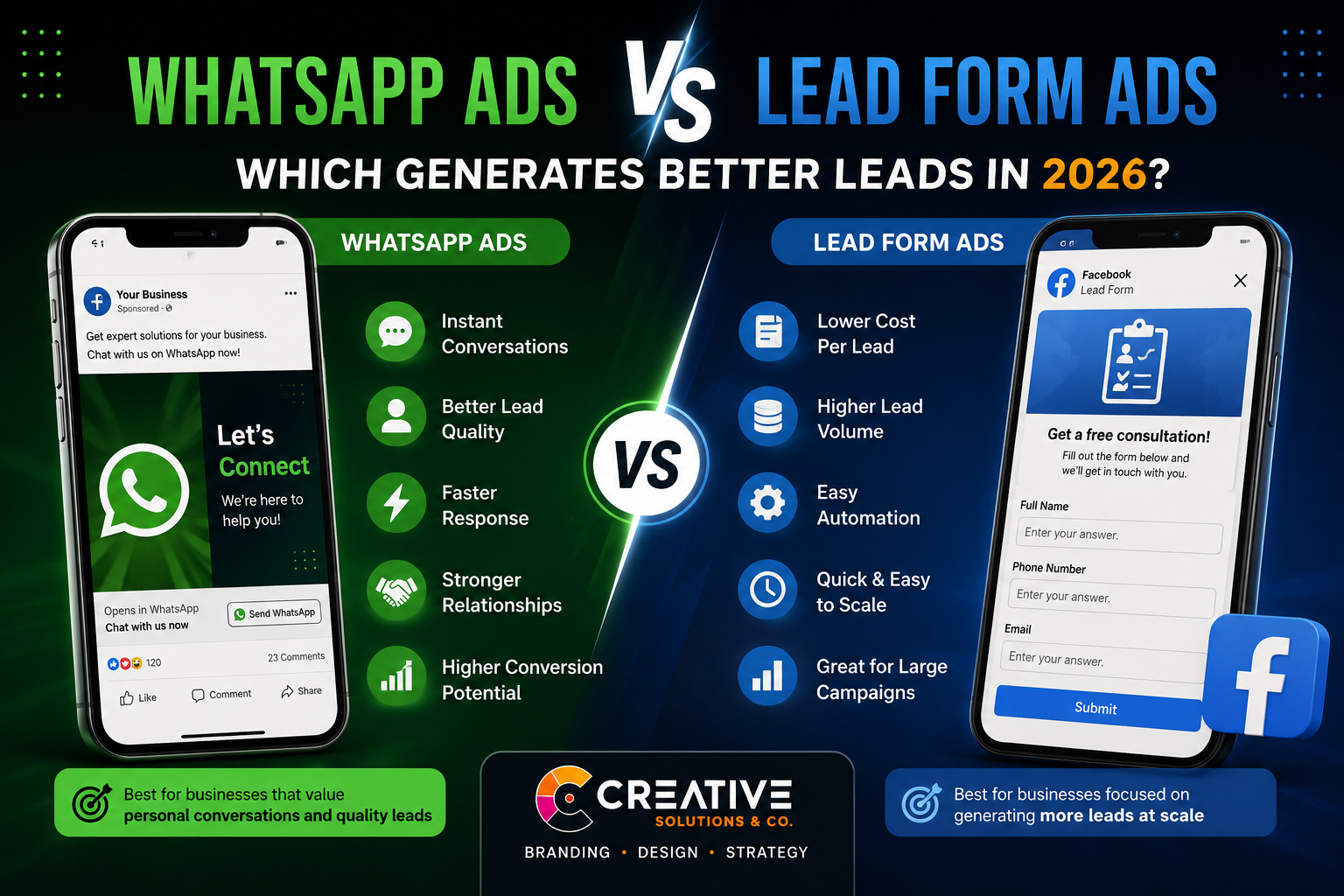
WhatsApp Ads vs Lead Form Ads: Which Generates Better Leads in 2026?

If you’re running Meta Ads to generate leads, you’ve probably asked yourself one important question: Should I use WhatsApp Ads vs Lead Form Ads? It’s one of the most common decisions businesses face when launching Facebook and Instagram advertising campaigns. Both options can generate leads, but they work very differently and often produce different results depending on your industry, sales process, and goals. Some businesses prioritize getting the maximum number of leads at the lowest possible cost. Others care more about lead quality, conversion rates, and actual revenue generation. The truth is that there is no one-size-fits-all answer. In this guide, we’ll compare WhatsApp Ads and Lead Form Ads in detail, discuss their advantages and disadvantages, and help you determine which option is best for your business in 2026. What Are WhatsApp Ads? WhatsApp Ads are Meta advertisements that send users directly into a WhatsApp conversation when they click on your ad. Instead of filling out a form, prospects can instantly message your business and start a conversation. The process is simple: This creates a more personal and interactive experience compared to traditional lead generation methods. Benefits of WhatsApp Ads Disadvantages of WhatsApp Ads For service-based businesses, WhatsApp Ads often create a more direct path to conversion because prospects can ask questions and receive answers immediately. What Are Lead Form Ads? Lead Form Ads, also known as Instant Forms, allow users to submit their information directly within Facebook or Instagram without leaving the platform. When a user clicks your advertisement, a form opens containing fields such as: The information is automatically submitted and stored for follow-up. Benefits of Lead Form Ads Disadvantages of Lead Form Ads Lead Form Ads can generate a large volume of leads, but businesses often need a strong follow-up process to convert those leads into paying customers. WhatsApp Ads vs Lead Form Ads: Key Differences Let’s compare both options across the factors that matter most. 1. Lead Quality Winner: WhatsApp Ads Lead quality is often the most important factor for businesses. A WhatsApp lead has already taken an additional step by choosing to start a conversation. This usually indicates stronger intent and higher interest. In many industries, WhatsApp leads are more likely to respond, engage, and eventually convert into customers. Lead Form Ads often attract users who submit forms quickly without thoroughly evaluating the offer. As a result, businesses frequently report a higher percentage of unqualified leads from Instant Forms. 2. Cost Per Lead Winner: Lead Form Ads Lead Form Ads generally produce a lower cost per lead because the process is easier for users. Since Meta automatically fills much of the user’s information, submissions require very little effort. WhatsApp Ads usually generate fewer leads for the same budget because starting a conversation requires more commitment. If your primary goal is volume, Lead Form Ads often perform better. 3. Conversion Rates Winner: Depends on Your Sales Process Many businesses focus only on cost per lead. However, the real metric that matters is conversion rate. A campaign generating 100 cheap leads that never convert is less valuable than a campaign generating 20 highly qualified leads that become customers. Businesses with strong sales teams often achieve excellent results with WhatsApp Ads because they can engage prospects immediately. Businesses with automated follow-up systems may perform well with Lead Form Ads. The best approach is to evaluate leads based on revenue generated rather than lead volume alone. 4. Speed of Communication Winner: WhatsApp Ads Speed matters in sales. With WhatsApp Ads, communication begins immediately after the click. Potential customers can: This immediate interaction helps build trust and shortens the buying journey. Lead Form Ads introduce an extra step because the business must contact the lead after the form submission. Any delay can reduce conversion opportunities. 5. Automation and Scalability Winner: Lead Form Ads Lead Form Ads are easier to automate. Businesses can connect Meta forms to: For organizations handling hundreds or thousands of leads monthly, automation becomes essential. While WhatsApp automation tools exist, managing large volumes of conversations can still be challenging. When Should You Use WhatsApp Ads? WhatsApp Ads work particularly well for businesses that require consultation or discussion before making a sale. Examples include: Branding Agencies Clients often want to discuss pricing, timelines, and project requirements before committing. Marketing Agencies Prospects typically have questions about strategy, results, and budgets. Real Estate Companies Buyers want information about locations, pricing, and availability. Construction Companies Projects often require detailed discussions and quotations. Healthcare Providers Patients frequently need information before booking appointments. Consultants Consultation-based businesses benefit from direct conversations. If your business relies heavily on trust and relationship-building, WhatsApp Ads are often the better choice. When Should You Use Lead Form Ads? Lead Form Ads are ideal when speed and volume matter. They are particularly effective for: Recruitment Campaigns Collecting applications quickly from a large audience. Event Registrations Gathering attendee information efficiently. Educational Institutions Generating inquiries at scale. Insurance Companies Collecting prospect information for follow-up. Large Sales Teams Businesses with dedicated sales departments capable of handling large lead volumes. If your primary objective is collecting as many leads as possible, Lead Form Ads can be highly effective. Common Mistakes Businesses Make Regardless of which campaign type you choose, certain mistakes can reduce results. Responding Too Slowly The faster you respond, the higher your chances of conversion. Focusing Only on Cost Per Lead Cheap leads are not always profitable leads. Asking Too Many Questions Long forms often reduce conversion rates. Poor Ad Creatives Even the best campaign structure cannot compensate for weak ad creatives. No Lead Qualification Process Without qualification, sales teams waste time on unqualified prospects. No Follow-Up System Many businesses lose leads because they fail to follow up consistently. Which Option Generates Better Leads? For most service-based businesses, WhatsApp Ads tend to produce higher-quality leads because prospects engage in direct conversations before making decisions. For businesses focused on lead volume and automation, Lead Form Ads often generate more leads at a lower cost. The right choice depends on your objectives.

social media management for business
content writing
Social Media Management For Business

Social Media Management For Business. If you are reading this you are probably familiar with social media platforms like Facebook, Twitter, Instagram, etc. The world is going digital and so should your business. Social media have revolutionized the world. From politicians to businesspersons, everyone rushes to social media when they want to reach the maximum number of people. But, how do they do it? If you are not familiar with it, don’t worry in this invaluable guide you will learn all the basics of Social Media Management and how it is used to grow a business. Let’s begin with the most basic question. What Do We Mean By Social Media Management For Business? Social Media Management is a term used for managing your online presence on Social Media Platforms through creating, publishing, and Analyzing content. It is not just about creating an online profile, it is more than that. At the Advanced level, Social Media Management involves engagement with social media users and interaction with followers. There are different tools used for the engagement and analysis of social media users and followers. Social Media managers oversee the above-mentioned activities to achieve maximum reach for their client’s businesses. Just a definition isn’t enough. To understand Social Media Management, you must look beyond the definition and learn how it can benefit your business. Why Social Media Management Is Important For Business? Social Media has enormous business potential. Brands can influence social media platforms to secure their business objectives, promote brand values, and generate more revenues by increasing store visits. To fully benefit from social media management an efficient team is required. You need a dedicated and experienced team for your social media management. Either you can hire your own team which may be costly or you can hire an experienced and affordable company like Creative Solutions & Co. This will enable you to have healthy social media management for your business. What Do Social Media Management Agencies Do? You might have a dedicated team and office for your social media management if you are an established brand. But if you are an emerging or small business you need a passionate team for your social media management. Social Media Management Agencies like Creative Solutions & Co. provide a team of dedicated, experienced, and passionate professionals who are bound to help you meet your targets. Their services include: Developing A Social Media Marketing Strategy to Meet Your Needs Creating a Social Media Management Schedule for Your Company’s Events Creating and Posting Content on Social Media Profiles to Boost Your Reach Creating Social Media Advertising Campaigns that Help You in Promoting Your Products Hiring a company for your social media management is a must these days. What is the cost of social media management? When it comes to hiring a company for your social media management, many of us think that it must be an expensive endeavor. But the reality is quite the opposite. Social Media Management is far cheaper than other marketing methods. There are multiple choices at your disposal. You can Hire Your Own social media management Team. That is a suitable option for Multination Corporation because they can bear the expenses of working space and other team management expenses. Or you can hire a company like Creative Solutions & Co. that takes care of your entire social media management and marketing. It is very cost-effective and efficient. You may have noticed that every brand, whether small or established is rushing toward social media due to its outstanding results. You can achieve more than your target if you do not compromise on the quality of your content. How to Create Content for Social Media Management? To create quality content for your social media management you need to be clear about your goal first. You must have a clear idea about your targeted audience, your followers, and your market understanding. You must set a target; it could be about increasing your followers, gaining more reach, boosting engagement or promotion of your brand, etc. It is suggested that a brand start an awareness and promotional campaign on social media to grow its following. That involves some technical knowledge but if you are relying on Creative Solutions & Co then rest assured. Social Media Management creates a brand image for your business through the content you share on your business profile. You need to design your posts very carefully and creatively. The more attractive & engaging the post is, the more reach and revenues you shall generate. Here are some tips that may help you in content creation for your social media business profile. Create an event Calendar or simply use your Google calendar. It includes all the holiday details, national and international days, festival days, etc. Use formal language. The informal language you use in your captions or within the design may damage your brand’s reputation. Think out of the box. Think of original post ideas about your business. Analyze your customers and create content that corresponds to their expectations. Post regularly. Post daily about your business and brand to spread awareness. Why Do You Need To Hire a Company for Your Social Media Management? It is not necessary for you to do everything by yourself when it comes to social media management. In order to create compelling content for your social media management, you must possess excellent design skills. But if you are not adept at designing, you should hire one. Everybody cannot ace at everything. The key to successful social media management is professionalism, dedication, consistency, and creativity. An experienced company like Creative Solutions & Co provides quality Social Media Management services. This includes designing your regular posts, writing content about your posts, creating, posting, and managing your social media business profiles, branding solutions, and much more. Check here. Here are some of the benefits of hiring a company for your social media management Saves You Money Help You Grow Your Business Provides a Dedicated Team For Your Social Media Management Provide Your Experienced

The Best Social Media Agency in Pakistan
Marketing
The Best Social Media Agency in Pakistan

The Best Social Media Agency in Pakistan. When we Google the best or top social media agencies in Pakistan it shows us a long list of companies and all of them claim to be the best in the field. But are they really the best in Pakistan? Or it is just Google? In this article, we learn about this, and at the end, you will know which company is the Best Social Media Agency in Pakistan and why. Navicosoft According to manifest.com Navisoft tops the list of the best Social Media agencies in Pakistan. It is a digital strategy company that was founded last year and is headquartered in Dockland, Australia. This mid-sized social media agency has offices in London, as well as in Lahore. Navisoft offers Web Development, SEO Search Engine Optimization, IT Services, and Social Media Management. Its clients list includes the United Nations in it. Plan Z According to the same website, Plan Z is service service-providing company that is based in Karachi, Pakistan. It was founded in 2015 to provide web development, social media marketing, mobile app development, and logo services. Its clients are mostly from the energy and education sectors. Plan Z’s prominent achievement is in the field of web development where it has developed a website for one of the leading pharmaceutical companies. The Media Gale The Media Gale is also a social media agency that is headquartered in New York with an office in Lahore. TMG offers services in social media marketing, pay-per-click, web development, SEO, and other IT services. The company was established two years ago in 2020 and has a mid-size in-house team. TMG’s prominent achievement again is in the field of web development where it has developed a website for a top-notch HR firm. Bit Links Tech Bit Links is a web development company that was established in 2018. This Lahore-based team of approximately 10 members provides web design & development, SEO, advertising, and logo services to small businesses. BLT earned success in the marketing field by grabbing a digital marketing contract with Moving Company. BLT helped the firm to appear on Google Maps and Google search through SEO. Social Hippos Social Hippos is a social media marketing agency that was launched in 2020. This small team of designers and developers provides social media marketing, graphic design, and digital strategy services to its clients. Social Hippos is based in Karachi with its clients from the automobile, hospitality, and real-estate industries. Social Hippos earned fame when a New Media outlet hired them for their social media marketing. These top five proclaimed social media agencies are examples of online rankings. As we can see most of these top social media agencies are based outside Pakistan and provide diverse services on different terms. To be the best in Pakistan the company has to be of Pakistan first. Let’s explore Creative Solutions & Co. A company that was started by two school friends is aimed at meeting the business needs of Pakistani business culture. This group of dedicated and passionate designers, illustrators, creative writers, and strategists is providing the best social media management service across the nation. Creative Solutions & Co is based in Hyderabad Pakistan and is different from other social media agencies. Here is why. Creative Solutions & Co. is focused purely on Social Media Management and being Pak-based they understand the business culture of the country and its needs. Creative Solutions & Co. is familiar with the business psychology of the country and understands how to market a brand digitally. Creative Solutions & Co. has helped 1400+ small businesses to establish a brand identity. Branding a business is their specialty and Creative Solutions & Co. has national brands on board for social media management. The company does not compromise on quality and that is why its team includes specialized & experienced professionals for quality work. Creative Solutions & Co. is very cost-effective. Where other social media agencies make digital marketing and social media management out of budget for you, Creative Solutions & Co. makes it affordable and beneficial for you. For your assurance, you can check creative solutions & co’s portfolio here and read client reviews. They are different because they are the best, and they are best because their work speaks of their success. Creative Solutions & Co. believes in earning by quality work, not by SEO promotion. The company facilitates its clients in every possible way with 24×7 interaction links open. They provide unlimited revisions to their clients because they believe that real success lies in client satisfaction. Visit https://creativesolutionsandco.com/ or WhatsApp for more details.

Content Marketing Strategy For Small Businesses
Branding
Content Marketing For Small Businesses

Marketing has always been about getting your brand in front of customers and making sure they know you exist. That’s why marketing campaigns have traditionally focused on advertising – from print ads to online banner advertisements or TV commercials. But with the rise of social media platforms like Facebook & Instagram taking over as our primary means for communicating news updates across all demographics—word-of-mouth referrals becoming more powerful than ever before due largely at least partly because it bypasses intermediaries who would typically promote these products onto us first (think product placement)—marketing strategies are evolving again. Up until recently, ads were a necessary evil. But now we’ve reached the digital age and suddenly found ourselves exposed to upwards of 5,000 advertisements per day! The primary purpose for these popups has shifted from informing us as people to annoying us with irrelevant information that only serves as fuel for our never-ending addiction. In an attempt at solving this problem once again – something which wouldn’t annoy or irritate customers but still give them what they want without tracking their browsing habits. Enter content marketing. Content marketing is a concept that’s been around for over 100 years, but it’s making waves again. Small businesses are finding value in this new way to compete with larger competitors – without being annoying or expensive. All SMBs need content marketing if they want their business survival rate high enough that no one can take them on. Content marketing for small businesses is a great way to drive traffic and build your brand. According to The Manifest, at least 53% of companies use content marketing for this purpose. Here are the 5 ways to create a strategy of content marketing that works fine for small businesses: Establish Your Goals When creating content for marketing purposes, it’s important to think about what your audience is searching for and how you can answer that need. A good strategy will be clear on the specific goal of their campaign so that there are no unclear expectations or disappointments once completed with results — SMART goals look like this: Improve Your Search Engine Ranking Within Three Months Acquire 1K subscribers in 30 Days (acquiring new subscribers should happen within a month) Increase sales by 25% from the specified market segments. This could take over two weeks depending upon the size needed. Identify Your Performance Indicator When it comes to performance indicators, consider the metrics that reflect how well you’re moving toward your goals. These may include (but are not limited to):  Unique page views Referral rate Number of downloads Net revenue Conversion rate Select Your Audience & Content Channels To succeed with content marketing, you need to be targeting your audience. The best way of doing this is by collecting data from Google Analytics or CoSchedule and narrowing down who will most likely purchase your product or service; then crafting a message for them. Once you know who’s reading your current content (or not), it will become clear where the most exposure and engagement can be found. Next, focus on channels to build an online presence with those audiences in mind – this includes optimizing for search engines as well. Craft Your Content and Distribute it to the Market Spreading your genius insights is just as important, if not more so than attracting a loyal following. The quality of content you produce will have an effect on how many people are able to receive and understand what it takes for them to be impressed with the information being spread. So make sure that even when creating new material or re-purposing old ideas into something fresh looking; always balance creativity with good writing skills in order to create engaging copy. Track Your Results In just the first few hours of delivering content, you’ll begin to see how people respond. Pageviews and likes are some indicators that engagement is taking place within your audience; Conversion rates indicate whether or not they’re converting into leads for sales opportunities with their website’s marketing team – which means more potential customers on our hands. There are many tools out there to help you track KPIs. Here are a few that might interest: Google Analytics for measuring page views, traffic sources, and keyword performance. Data box with its array of powerful metrics tracking almost anything from conversion rates on your site or customer satisfaction scores. Excel also has some helpful features if this is what works with you best.

social media marketing
Branding
Social Media Marketing For Businesses | A Complete Guide

The use of social media platforms to build a brand, increase sales, and drive website traffic is known as social media marketing. This includes posting high-quality content to your social media profiles, listening to and engaging with your followers, analyzing your results, and running social media advertisements. The main social media platforms are Facebook, Youtube, Twitter, Instagram, and Snapchat. Publishing was, mostly, the first step in social media marketing. Businesses were using social media to drive traffic to their websites and, eventually, sales. However, social media has progressed far beyond being merely a platform for content distribution. Businesses nowadays use social media in a variety of ways. A company, for example, which is concerned about what people are simply stating about its brand, could well monitor social media conversations and respond to relevant mentions. A business that wants to understand how it is performing on social media would use an analytics tool to evaluate its reach, engagement, and sales on social media. A company that wants to reach a specific group of people on a large scale would use highly targeted social media ads. They are altogether known as Social Media Marketing & Management. Some important aspects of good social media marketing for businesses: Strategy First things first, strategy. What are your goals? And social media can be able to achieve the goals for your business? Several businesses use social media to raise brand awareness, while others use it to drive website traffic and sales. Social media also can help you boost brand engagement, build a community, and serve as a customer support channel for your customers. Then comes the other important question, which social media platform, do you want to zero in on? There are several. Facebook, Instagram, Twitter, LinkedIn, Pinterest, YouTube, Snapchat, to name a few. Planning and Publishing New business social media marketing usually begins with maintaining a consistent presence on social media. Social media is used by nearly three billion people. Being present on social media platforms allows your brand to be discovered by potential customers. Simply, sharing a blog post, an image, or a video is all it takes to publish to social media. It’s the same as sharing on your personal Facebook profile. However, rather than creating and publishing content on the spur of the moment, you should plan ahead of time. Additionally, to ensure that you are maximizing your social media reach, you must post great content that your audience enjoys at the right time and frequency. Advertising When you have more funds to expand your social media marketing, consider social media advertising. Social media ads enable you to reach a larger audience than just those who follow you. These days, social media advertising platforms are so powerful that you can choose who sees your ads. You can create target audiences based on demographics, interests, and behaviors, among other things. When you have multiple social media advertising campaigns running at the same time, you should take into account using a social media advertising tool to make bulk changes, automate processes, and optimize your ads. Ways Creative Solutions & Co. Can Help Have problems in managing social media marketing and management? Fill us in about your goals and let the team of Creative Solutions & Co. power up your business.

social media design
Branding
How to Increase Engagement through Social Media Designs

What are Social Media Designs? Beginning with social media designs. What is it anyway? Any graphics linked with your social media accounts are included in social media designs. These graphics, which range from your social media banner image and profile picture to the meta images you use for your blog posts, play an important role in attempting to engage your audience and tempting them to take the actions you want them to take. Below are listed common social media actions that can be used to map key metrics: Likes Impressions Retweets Comments or replies Shares Pins Upvotes Followers Click-through rate (CTR) Here are several helpful tips to help you spruce up your post designs if you want to turn your social media accounts into community-building, revenue-generating channels. Consistency is the key here to prosper But with what remains consistent? With your social media designs. Whenever it comes to social media graphics, it’s critical to stick to your brand’s identity. Anything, from your colors and fonts to the various design elements you use within those graphics, must work together to tell a unified story. A consistent brand identity ensures that your audience will recognize your brand based solely on its design over time. The understanding will also aid in recapturing people’s attention. Use social media templates Using templates is one of the simplest ways to ensure that your brand is consistent across all of your social media images. By creating social media templates, you will not only save time when creating graphics (yay! ), but you will also leave little to no room for deviation from your brand’s style. The most effective way to use social media design templates is to: Break down the types of content you’d like to post across each channel Create a template or outline for each post type Include multiple colors and layout options for each template you create Create your images and share them on social media! Entertain, engage, or inspire Once starting to plan your posts on social media, an excellent way to ensure you’re not just posting for the sake of posting is to categorize each post into one of the following categories: Entertain: The primary objective of these posts is to elicit a reaction from your audience, whether it’s laughter or stirring your emotions. Do not however focus on getting your audience to return to a homepage or buy a product, though it may still happen in the end. Engage: In this type, tailor your content to encourage your audience to interact with that specific post or with your brand as a whole. Whether they like or comment on your post, share it with their friends, save it, or click on your call to action. Inspire: All such types of posts are especially popular among businesses that sell products such as cookbooks, interior design, makeup, influencer marketing, and so on. The goal of such posts is to motivate your audience to engage, whether it’s a kitchen remodel or an improvement to their email marketing campaign. Make It Worth Sharing Or Saving As the popular cliché goes, time is money. It is actually the case here. If your audience is inclined to spend time on your social content, you’re probably doing something right. However, watching something is only the first step—you want them to take action in a certain way, which helps boost your content in the social algorithm. The more engagement your post receives, the more people each platform is likely to show it to. That’s where we came in. At Creative Solutions & Co, we add our hard work to your Brand, in this case, it will be social media management. Creative Solutions & Co. provides the best packages for this service. Economical-yet-exceptional is our motto. And it reflects in our work too.