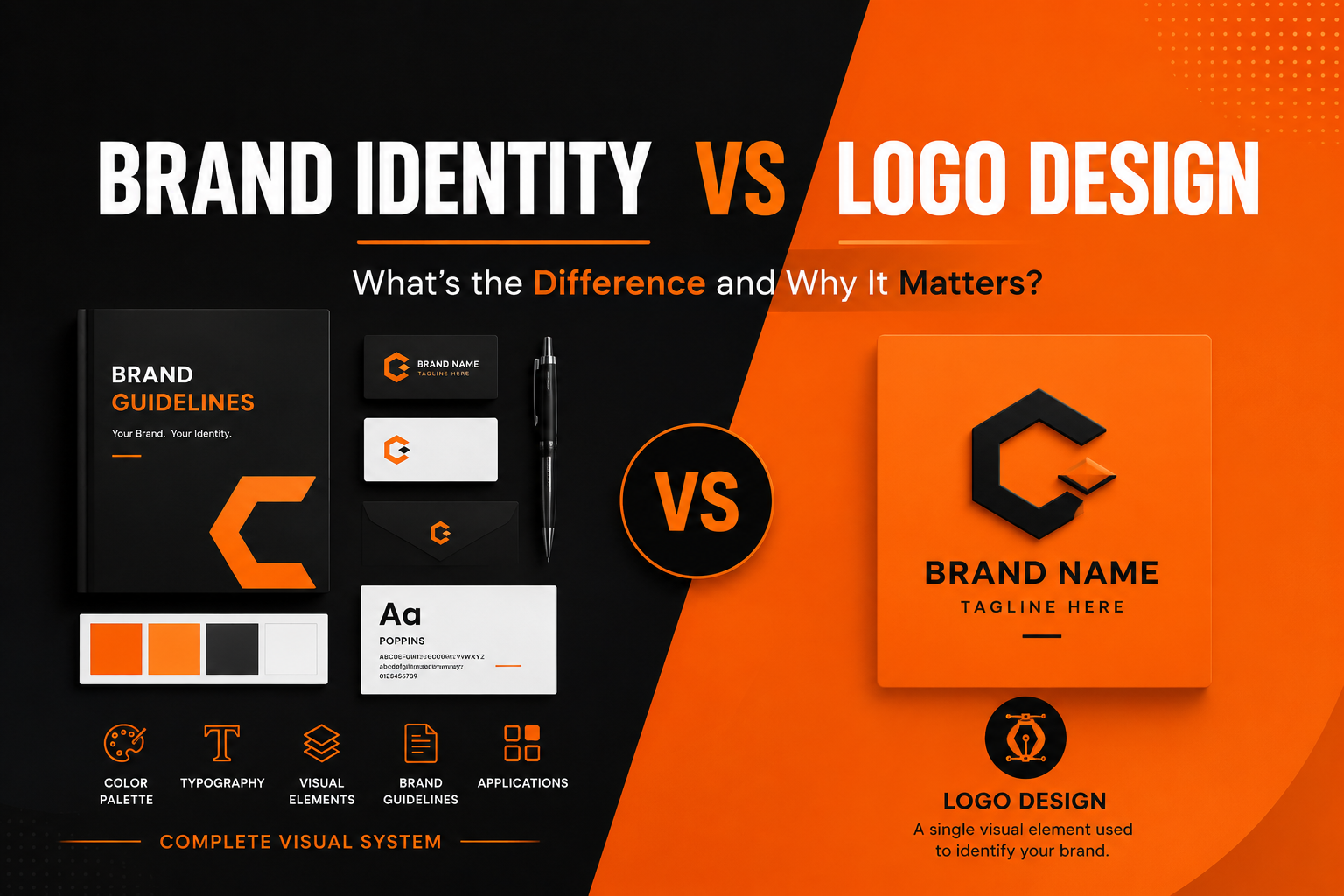
You can have an outstanding product, exceptional customer service, and competitive pricing, yet still struggle to attract customers. Why? Because customers don’t experience your business first—they experience your brand. Before someone visits your website, requests a quote, walks into your store, or contacts your team, they’ve already formed an opinion based on what they see. Your logo, website, social media presence, messaging, and overall visual identity combine to create an impression within seconds. For many small businesses, branding is treated as an afterthought. It’s often reduced to designing a logo, choosing a few colors, and creating a Facebook page. Unfortunately, that’s where many businesses unknowingly begin losing customers. Strong branding isn’t about making your business look attractive. It’s about creating trust, communicating professionalism, and giving customers a reason to choose you over dozens of competitors. In this guide, we’ll explore the most common branding mistakes small businesses make and explain how you can avoid them to build a stronger, more memorable brand. 1. Treating a Logo as Your Entire Brand This is, without question, the most common branding mistake. Many business owners believe that once they have a professionally designed logo, their branding is complete. It isn’t. A logo is simply a visual identifier. Your brand is the complete experience customers have with your business. Think about some of the world’s most recognizable companies. People don’t trust Apple because of its logo. They trust Apple because every interaction—from product packaging and website design to advertising and customer experience—feels consistent. The same applies to businesses of every size. A complete brand includes: Your logo introduces your business. Your brand identity convinces customers to trust it. How to Avoid It Instead of investing only in logo design, think about how your business will appear across every customer touchpoint. Ask yourself: If the answer is no, you’re building a logo—not a brand. 2. Trying to Appeal to Everyone One of the fastest ways to weaken a brand is trying to attract everyone. Many small businesses use messaging like: “We provide quality services for everyone.” While it sounds inclusive, it tells customers absolutely nothing. Successful brands know exactly who they’re speaking to. A luxury interior design company communicates differently from a local restaurant. A technology startup speaks differently from a healthcare provider. Your branding should reflect: When your branding tries to please everyone, it rarely connects deeply with anyone. Customers remember brands that feel relevant to them—not brands that try to be everything to everyone. How to Avoid It Clearly define your target audience before making branding decisions. Ask questions such as: The clearer your audience, the stronger your branding becomes. 3. Copying Your Competitors Instead of Differentiating Yourself It’s natural to research competitors before launching a business. The mistake happens when inspiration turns into imitation. Many small businesses end up using: The result? Customers struggle to distinguish one business from another. Imagine walking down a street where every restaurant uses the same colors, fonts, and visual style. Nothing stands out. Your business should never rely on looking similar to competitors. Instead, it should communicate what makes you different. Strong brands answer one simple question: “Why should someone choose us instead?” Whether your advantage is premium quality, faster service, affordability, innovation, sustainability, or customer experience, your branding should communicate that clearly. How to Avoid It Study competitors to understand the market—not to copy it. Look for opportunities to create a unique identity. Your goal isn’t to fit in. It’s to become memorable. 4. Inconsistent Branding Across Different Platforms Imagine discovering a business through Instagram. The profile looks modern and professional. Then you visit the website. Different colors. Also, Different fonts. Different messaging. The logo appears differently on every page. The experience immediately feels disconnected. This inconsistency weakens customer confidence. Consistency is one of the most powerful branding tools available. Every interaction should reinforce the same identity. This includes: When everything feels connected, customers perceive the business as more professional and trustworthy. Inconsistent branding, on the other hand, often signals inexperience—even if the products or services are excellent. How to Avoid It Create clear brand guidelines that define: These guidelines ensure everyone representing your business communicates the brand consistently. As your business grows, consistency becomes one of your greatest competitive advantages. 5. Ignoring Brand Strategy Most small businesses jump straight into designing a logo without first answering a far more important question: What does our brand actually stand for? Brand strategy is the foundation of every successful brand. It defines how your business wants to be perceived and why customers should choose you over competitors. Without a strategy, branding becomes a collection of random design decisions rather than a system that supports business growth. A strong brand strategy answers questions like: These answers influence everything from your logo and website to your advertising campaigns and customer service. When businesses skip this step, their branding often feels generic because there is no clear direction behind it. How to Avoid It Before designing anything, define your brand strategy. Your visual identity should communicate your business goals—not replace them. A beautiful logo without strategy is simply decoration. A brand built on strategy becomes a competitive advantage. 6. Choosing Price Over Quality Every business has a budget. However, branding is one area where choosing the cheapest option often becomes the most expensive decision. Many startups purchase inexpensive logos or template-based branding because they believe they’re saving money. Months later they realize: Now they’ve paid twice. Professional branding isn’t expensive because designers spend more time making things look attractive. It’s valuable because it solves business problems. A professional branding process includes research, strategy, positioning, consistency, and long-term usability. Cheap branding often skips all of those steps. How to Avoid It Think beyond today’s cost. Ask yourself: “Will this branding still represent my business five years from now?” If the answer is uncertain, you’re probably making a short-term decision instead of a long-term investment. 7. Treating Branding as a One-Time Project Many businesses believe branding ends once the logo is